Looking for something?
A place, an idea, a question. Find the articles that interest you.
Articles to discover
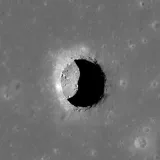 Beneath the Moon, a pit is not enough to reveal an entire caveImages, radar and thermal measurements shed light on lunar cavities. But an entrance spotted from orbit reveals neither the extent of the underground nor whether it is habitable.
 The solid Earth is becoming slightly less flattened: what satellites measureA study published on 9 September 2026 reveals that uplift in the polar regions accelerated between 1997 and 2015. This tiny change in the shape of the solid globe sheds light on the effects of ice and water redistribution.
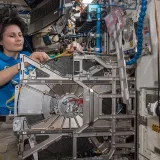 Artificial gravity: Italy consults researchers on an orbital platformASI is collecting proposals until 6 November 2026 for small automated experiments under adjustable gravity, including lunar and Martian gravity.
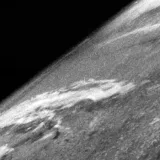 The first photograph of Earth from space: what the 1946 flight showedA camera aboard a V-2 photographed Earth on 24 October 1946, from an altitude of about 105 kilometres. A suborbital flight, long before images of the entire globe.
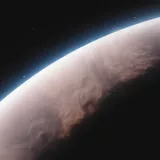 WASP-17 b: Webb reconstructs a more extended atmosphere on the evening sideA transit-mapping method distinguishes several regions along the edge of the atmosphere. It refines measurements without providing a photograph or a complete weather report for this gas giant.
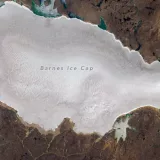 Barnes Ice Cap: why researchers speak of an interrupted glaciationPlants preserved beneath the ice trace an ancient advance, followed by a retreat. The finding sheds light on a slow process, without heralding an imminent deep freeze.
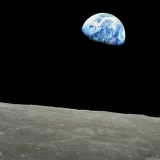 The Moon’s formation: what an assembly in a few hours meansSimulations can form a satellite directly after an impact. The 2026 research sheds light on the role of heat and the strength of rocks, without proving a single scenario.
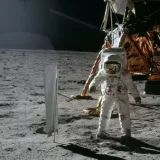 Objects left on the Moon: how mission equipment becomes heritageCameras, instruments and commemorative objects form an archive in situ. Cataloguing them helps us understand the missions and prepare for their protection.
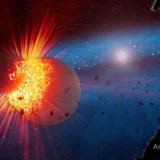 Webb: reading planetary collisions in stardustA study of 21 debris discs distinguishes several mineral signatures. Astronomers infer collisions between large rocky bodies, without observing them directly.
 2001: A Space Odyssey: why Kubrick lets the images tell the storyThe 1968 film was developed with Arthur C. Clarke, but left out some of the screenplay’s explanations. Its history sheds light on the space it gives to images and music.
 Greenland: what the 2,347 km³ of ice lost between 2010 and 2023 measuresAn analysis combining CryoSat and ICESat-2 describes the thinning of the ice sheet. It is also valuable for comparing two measurement methods.
 Laika: why her 1957 flight was a first in orbitSputnik 2 put the first animal into orbit around the Earth. Flights had taken place before it, and no return was planned for the dog: the milestones of a historic mission.