Atomic clocks: why our time depends on a network
The alert over the clocks at the Paris Observatory highlights an essential infrastructure. The atomic second, world time and GPS: three concepts to distinguish.
L’actualité, les repères et les regards de la rédaction.
The alert over the clocks at the Paris Observatory highlights an essential infrastructure. The atomic second, world time and GPS: three concepts to distinguish.
In Cameroon, Lake Nyos released a deadly cloud of CO₂ in August 1986. Understanding how the gas was stored at depth also explains how degassing systems work.
The physicist, who died on 22 October 2026 aged 93, helped turn light into a tool for controlling atoms. His legacy brings together experiments, theory and teaching.
From the Tibetan Plateau to Oceania, researchers are studying the effects of variants inherited from Denisovans. Finding a trace and demonstrating its function are two distinct steps.
They do not make mathematics uncertain: Gödel’s theorems set a precise limit on formal systems powerful enough to describe arithmetic.
Their lens-shaped form sometimes stays in place while air flows through them. Condensation, terrain and mountain waves explain this apparent paradox.
A comparison of three atomic clocks in Boulder sheds light on preparations for a new definition of the second. Differences between measurements are part of the process.
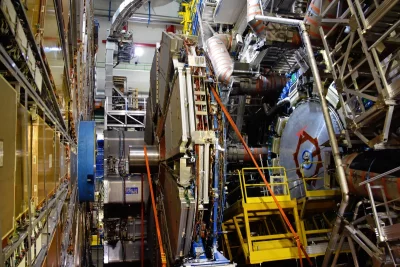
A rare interaction involving W bosons has been observed in LHC data. The result, presented in September, strengthens a test of electroweak theory.
The LUX-ZEPLIN experiment has detected an unusual interaction in its data. The team wants to understand its origin, without announcing a discovery of dark matter.
Physicists at the University of Luxembourg predict a repulsive interaction between atoms. Its dependence on distance recalls gravity, but its origin is electromagnetic and its detection remains to be explored.
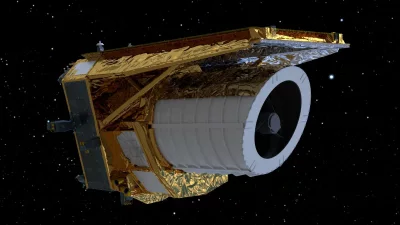
The Euclid telescope has discovered 31 very ancient quasars, including two observed when the Universe was just 670 million years old. How do these beacons reveal the first black holes?
A study conducted at the LIH describes immune changes associated with glioblastoma. It sheds light on a possible biomarker, still a long way from being a routine test.