Articles to discover
 Environment · Nov 24, 2026Fires in Indonesia: what palm oil certification can verifySatellite alerts can help guide an investigation into fires in Indonesia, but they prove neither where a fire started nor where the oil being sold came from. What RSPO standards verify, and what its new tools will change.↗
 Nature and environment · Nov 24, 2026Why hippos pose an ecological problem in ColombiaColombia announced new monitoring measures in September 2026. How they will be implemented in the Magdalena basin, where hippos have spread, remains to be seen.↗
 Nature and environment · Nov 24, 2026In Borneo, gibbons’ silence makes them harder to countIn Sebangau, less frequent or delayed gibbon calls are complicating acoustic monitoring. Understanding why silence does not necessarily mean absence requires distinguishing between observation, estimation and changes in a population.↗
 Nature and environment · Nov 24, 2026Why camera traps so rarely photograph the bush dogTwelve detections in more than 600,000 survey nights. The study of the bush dog sheds light both on its rarity and on what a camera can measure in a forest.↗
 Nature and environment · Nov 24, 2026In Timor-Leste, recommendations for whale-watching, but few checksTimor-Leste has published guidelines for whale-watching trips. But without licences, checks and penalties, their implementation remains uncertain.↗
 Education · Nov 23, 2026Wild Guardians: linking nature stories to observationTwo Wild Guardians learning journeys, in Chattanooga and northern Tanzania, combine maps, comics and activities to explore ecosystems. An adaptation proposed here shows how to observe the likely path of water without entering a watercourse.↗
 Nature and environment · Nov 23, 2026Chinese mangroves: more bird species recorded, but habitats must be preservedBetween 1998 and 2020, the area of mangroves studied in China more than doubled. Bird records also increased, but these figures do not mean that all species benefit equally from the expansion of the trees: mudflats remain essential for some waders.↗
 Science · Nov 23, 2026How do animal remains from excavations become clues?In Pantin, archaeozoologist Juliette Le Cunff describes the first steps in studying animal remains recovered during excavations. One distinction guides the whole investigation: identify and observe first, then interpret in context.↗
 Basic science · Nov 23, 2026How mantle movements could explain the Great UnconformityA study published in Nature links the Great Unconformity to a possible cycle of uplift, erosion and then subsidence of the continents. Here is what the models explain, and the limits of this hypothesis.↗
 Nature and environment · Nov 23, 2026In Minnesota, an experiment links wolves with blueberry germinationIn an experiment conducted in Minnesota, 96% of blueberry seeds recovered from wolf droppings germinated, compared with 69% of control seeds. The difference suggests an effect from passage through the gut, without by itself demonstrating the creation of new blueberry patches.↗
 Nature and environment · Nov 23, 2026Otters in the Klang: a sign of life, not a diagnosis of the riverOtters are regularly spotted along the Klang in Kuala Lumpur. These sightings renew hopes for a healthier river, but do not replace water-quality measurements or population monitoring.↗
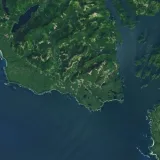 Nature and environment · Nov 22, 2026Why the water turns turquoise near Vancouver IslandA turquoise patch observed near Nootka Island in April 2025 is linked to Pacific herring spawning. What the satellite image shows, and what it cannot tell us.↗


