Looking for something?
A place, an idea, a question. Find the articles that interest you.
Articles to discover
 Why soaring can take less energy than swimming: what 38 species revealA study published in October 2026 compares 17 years of movements by birds and bats. The condor barely flaps its wings, but its efficiency depends on air currents.
 Why Star Wars spacecraft don’t look like real rocketsStaged rockets, the heat of atmospheric re-entry, life on board and the speed of light: what physics really allows spacecraft to do.
 Boulez and the ‘Gurre-Lieder’: why this 1975 recording still mattersRecorded in London in 1974 and released in 1975, the *Gurre-Lieder* conducted by Pierre Boulez also tell the story of Arnold Schönberg’s musical evolution.
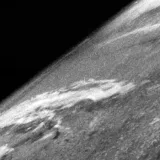 The first photograph of Earth from space: what the 1946 flight showedA camera aboard a V-2 photographed Earth on 24 October 1946, from an altitude of about 105 kilometres. A suborbital flight, long before images of the entire globe.
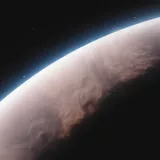 WASP-17 b: Webb reconstructs a more extended atmosphere on the evening sideA transit-mapping method distinguishes several regions along the edge of the atmosphere. It refines measurements without providing a photograph or a complete weather report for this gas giant.
 Bathroom plants: choosing according to light and careSpider plant, maidenhair fern or peace lily: conditions matter more than humidity alone. And these plants are no substitute for ventilation.
 Lenticular clouds: why do they seem to stand still in the wind?Their lens-shaped form sometimes stays in place while air flows through them. Condensation, terrain and mountain waves explain this apparent paradox.
 Laika: why her 1957 flight was a first in orbitSputnik 2 put the first animal into orbit around the Earth. Flights had taken place before it, and no return was planned for the dog: the milestones of a historic mission.
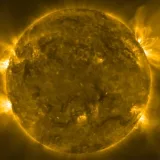 Solar Orbiter: tracing the origin of the solar windSolar Orbiter has linked a magnetic deformation observed in the solar wind to its source on the Sun. The discovery sheds light on magnetic reconnection and space storms.
 Space debris: seeing is not enoughThe ESA’s 2026 report points to more fragments that are difficult to identify. Radars, telescopes and impact traces shed light on different parts of the problem.
 Ozone: two years, two findingsA favourable assessment for 2025, a large area in September 2026: reports on Antarctica do not contradict each other. They measure different periods.
 7GC GP II: CSSF flags impersonationThe 30 September alert concerns people improperly using the name of 7GC GP II. The CSSF states that the real company has no connection with the reported activities.