Articles to discover
 Nature and environment · Nov 8, 2026Why Idaho parachuted beavers in 1948In 1948, Idaho transported 76 beavers by plane and parachute to settle them in remote areas. The report published in 1950 sheds light on the reasons for the operation, how it was carried out and its true scope.↗
 AI · Nov 8, 2026Coding with AI: delegating without losing controlCoding agents speed up some tasks, but supervising them depends on skills that need to be practised. What studies and engineers actually allow us to say.↗
 Business · Nov 8, 2026Why is Volkswagen putting the ID. Golf on hold?Volkswagen is temporarily suspending development of the ID. Golf, without cancelling the project. The group’s accounts shed light on the trade-offs between electrification, margins and investment.↗
 Economy · Nov 8, 2026In Japan, raising prices remains a difficult choice despite inflationIn Japan, some companies are reluctant to pass on higher costs, despite inflation being close to 2%. The gap between prices, wages and consumer habits sheds light on this trade-off.↗
 Technology · Nov 8, 2026Robia and Jojo, the Pakistani robots serving dishes in KarachiIn Karachi, Robia and Jojo bring dishes to the tables, but taking orders and clearing plates remain human tasks. A concrete example of service robotics, distinct from functions announced for the future.↗
 Technology · Nov 8, 2026SGBC: the French project aiming to bring Game Boy cartridges back to the televisionThe SGBC promises to run Game Boy cartridges on a television. The console is still in development: compatibility, final features and price have yet to be confirmed.↗
 Nature and environment · Nov 8, 2026Why do we so rarely see baby pigeons in towns and cities?Young pigeons spend their first weeks in inconspicuous nests. By the time they leave, they are already feathered and look much like the birds we see in the street.↗
 Economy · Nov 8, 2026Energy in Luxembourg: consumption forecasts do not tell the whole storyThe projections cited for 2026 and 2027 vary differently for gas, heating oil and fuels. On their own, they do not measure progress towards Luxembourg’s climate targets.↗
 AI · Nov 8, 2026Coding with AI: finishing faster does not mean learning as muchAn experiment involving 52 developers distinguishes between code produced and understanding retained. Differences in quiz scores also depend on the observed use of the assistant.↗
 Science · Nov 8, 2026Deep geothermal energy: why monitor earthquakes before and after operations?Injecting water deep underground can alter stresses in rocks and trigger earthquakes. Why do deep geothermal projects require monitoring before, during and sometimes after operations?↗
 Culture · Nov 7, 2026Fort Thüngen: the Three Acorns beyond the turretsThe Three Acorns are just one landmark among the layers of Fort Thüngen: a largely preserved underground network, remains and a redoubt rebuilt to nineteenth-century plans.↗
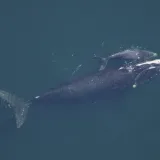 Nature and environment · Nov 7, 2026North Atlantic right whales: calf identified late in CanadaPhotographed near Anticosti on 25 September, a calf probably born during the 2025-2026 season was identified after the images were analysed. The case shows how photographic catalogues refine the figures, without making counts exhaustive.↗


