Articles to discover
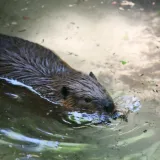 Nature and environment · Nov 8, 2026Why Idaho parachuted beavers in 1948In 1948, Idaho transported 76 beavers by plane and parachute to settle them in remote areas. The report published in 1950 sheds light on the reasons for the operation, how it was carried out and its true scope.↗
 Culture · Nov 8, 2026Saint-Alban: when a psychiatric hospital becomes a matter of connectionAt Saint-Alban, workshops, a library and links with the village contributed to a different way of thinking about the psychiatric hospital. The 1982 archive sheds light on this legacy without conflating it with current practice.↗
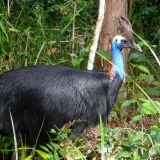 Nature and environment · Nov 8, 2026Tracking the cassowary, reading the forest with the KasuaThe documentary “On the Cassowary’s Trail” follows the clues left by a large bird in Papua New Guinea. Its search also sheds light on the Kasua people’s relationship with the forest they inhabit.↗
 Nature and environment · Nov 8, 2026In Occitanie, stress on trees can continue after summerIn Occitanie, the heat and lack of rain in summer 2026 put trees under strain. Understanding water stress helps distinguish early leaf fall from decline or death, and shows why the effects can last.↗
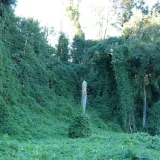 Nature and environment · Nov 8, 2026Kudzu: how a plant introduced to protect soils can smother an environmentIntroduced in the United States and then promoted to combat erosion, kudzu can form dense carpets in open environments. Its history sheds light on the mechanisms that make an introduced plant difficult to contain.↗
 Society · Nov 8, 2026In the Grund, removing a nest is not enough to resolve the Asian hornet problemAn operation followed by RTL shows how a nest is dealt with in practice. An established species, identification and reports: useful points for understanding the response in Luxembourg.↗
 Economy · Nov 8, 2026Energy in Luxembourg: consumption forecasts do not tell the whole storyThe projections cited for 2026 and 2027 vary differently for gas, heating oil and fuels. On their own, they do not measure progress towards Luxembourg’s climate targets.↗
 Nature and environment · Nov 7, 2026In Suriname, gold mining around Wayana villages puts far more than the forest at stakeAround the Lawa, gold mining threatens forest habitats and the resources on which the Wayana depend. The report also documents the limits of available knowledge about wildlife and mercury contamination.↗
 Nature and environment · Nov 7, 2026In Madagascar, linking forests is not enough: habitat must be restoredIn eastern Madagascar, a forest corridor aims to reconnect two protected areas. The first plantings and lemur observations are encouraging, but do not yet prove that the habitat is recovering sustainably.↗
 Nature and environment · Nov 6, 2026Ticks: why a hedgerow and a forest do not tell the same story about riskAn INRAE and CNRS model examines ticks at the scale of the bocage. What it measures, its limitations and the precautions that remain useful in autumn.↗
 Nature and environment · Nov 6, 2026Biodiversity: what satellites can measure, and what needs checking on the groundThe ESA is strengthening its ecosystem-monitoring tools. But a protected area on a map does not, by itself, prove that nature is doing better there. Here’s how to read this new data.↗
 Nature and environment · Nov 6, 2026SolsVivants: understanding what organisms beneath our feet doThe CNRS-INRAE programme is starting with €9 million over five years. Its challenge: to link organisms and their interactions to how soils actually function.↗


