Articles to discover
 Science · Nov 8, 2026What the sand of Omaha Beach preserves of D-DayA sand sample collected from Omaha Beach in 1988 contained metal fragments consistent with war debris. The reported 4% applies to this sample, not to the whole beach.↗
 Health · Nov 8, 2026Restless legs: recognising the signs without self-diagnosingAn irresistible urge to move the legs, uncomfortable sensations at rest and disturbed sleep: these signs may point to restless legs syndrome, but they are not enough to diagnose it. Here is what we know and when to seek medical advice.↗
 Science · Nov 8, 2026Why groups of walkers sometimes turn leftA study conducted in Spain and Japan finds an average bias towards the left in walking experiments. It links this to individual tendencies, without identifying their origin or presenting it as a universal rule.↗
 Nature and environment · Nov 8, 2026Why do we so rarely see baby pigeons in towns and cities?Young pigeons spend their first weeks in inconspicuous nests. By the time they leave, they are already feathered and look much like the birds we see in the street.↗
 Space · Nov 8, 2026At Pic du Midi, a two-metre telescope is betting on precisionThe Bernard Lyot Telescope at Pic du Midi owes its place in research less to the size of its mirror than to the specialised instruments that analyse starlight.↗
 Nature and environment · Nov 8, 2026Why robins follow gardeners and still sing in winterTurned soil gives them access to food; their song also helps defend a territory. These two behaviours shed light on the robin behind its familiar appearance.↗
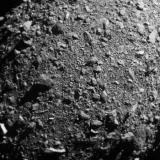 Space · Nov 8, 2026Hera observes Didymos: what remains to be understood after DART’s impactHera’s first close-up views open the investigation into the effects of DART. Dimorphos’s mass, structure and transformation remain at the heart of the measurements to come.↗
 Culture · Nov 8, 2026In Walferdange, Expo Trains takes visitors between real places and imaginary settingsNineteen exhibitors and railway landscapes from several countries: Expo Trains continues this Sunday, 8 November, at the Centre Prince Henri in Walferdange.↗
 Science · Nov 8, 2026Deep geothermal energy: why monitor earthquakes before and after operations?Injecting water deep underground can alter stresses in rocks and trigger earthquakes. Why do deep geothermal projects require monitoring before, during and sometimes after operations?↗
 Nature and environment · Nov 7, 2026North Atlantic right whales: calf identified late in CanadaPhotographed near Anticosti on 25 September, a calf probably born during the 2025-2026 season was identified after the images were analysed. The case shows how photographic catalogues refine the figures, without making counts exhaustive.↗
 Nature and environment · Nov 7, 2026In Madagascar, linking forests is not enough: habitat must be restoredIn eastern Madagascar, a forest corridor aims to reconnect two protected areas. The first plantings and lemur observations are encouraging, but do not yet prove that the habitat is recovering sustainably.↗
 Climate · Nov 6, 2026In Greenland, a lake beneath the ice delays the release of meltwaterBeneath Flade Isblink, an invisible reservoir fills in summer and empties mainly in autumn. Satellites reveal why the date of melting alone is not enough to predict when water will arrive downstream.↗


