Articles to discover
 Space · Nov 20, 2026Callisto: what Tianwen-4 could learn from orbit and the surfaceTianwen-4 could study Callisto from orbit and, if the project goes ahead, from a landing site. Here is what these two approaches could reveal, and why the ocean believed to lie beneath the ice remains a hypothesis.↗
 Nature and environment · Nov 20, 2026In Kathmandu, crows remain visible as habitats changeIn Kathmandu, crows adapt to utility poles and accessible waste. Their presence, however, does not tell us what is happening to birds that depend on mature trees, in a city where green spaces are shrinking.↗
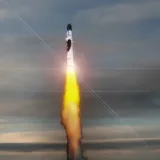 Space · Nov 19, 2026Google and Blue Origin prepare an in-orbit computing test for 2029The Suncatcher project plans to send satellites equipped with computing chips into orbit. The announced flight is intended to change the scale of the hardware that can be tested, with an orbital launch targeted for early 2029.↗
 Nature and environment · Nov 14, 2026Gulf of Panama: what the missed cooling of 2025 revealsA study documents a sharp reduction in cold-water upwelling in 2025. Wind, nutrients and reefs: understanding the mechanism without confusing risk with measured damage.↗
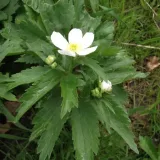 Nature and environment · Nov 13, 2026Grasslands of the Massif Central: an observatory to understand how they adapt to the climateAn observatory launched in the Massif Central is monitoring 150 plots to link plant diversity, soils, climate and livestock farming practices. The first surveys are building a basis for comparison, not yet a validated adaptation method.↗
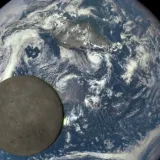 Space · Nov 11, 20262026 QQ8: why this mini-moon will not stay around EarthSpotted in August 2026, 2026 QQ8 is thought to have been temporarily captured by Earth's gravity. Its orbit explains the difference between a mini-moon and a quasi-satellite, and why this visit must come to an end.↗
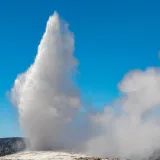 Basic science · Nov 10, 2026Supervolcanoes: what monitoring signals can predictEarthquakes, ground deformation and gas emissions help volcanologists monitor large volcanic systems. But detecting unusual activity is not the same as dating a super-eruption.↗
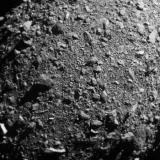 Space · Nov 8, 2026Hera observes Didymos: what remains to be understood after DART’s impactHera’s first close-up views open the investigation into the effects of DART. Dimorphos’s mass, structure and transformation remain at the heart of the measurements to come.↗
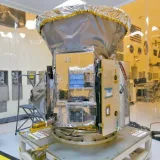 Space · Nov 7, 2026Black Hole Hunters: what internet users are looking for in TESS dataThe Black Hole Hunters project invites the public to spot variations in TESS data that are consistent with the presence of black holes. These patterns remain candidates to be checked, not confirmed discoveries.↗
 Climate · Nov 6, 2026Arctic methane: why estimates are not yet telling the same storyThe AMPAC-Net review highlights a gap between two methods of estimating emissions. Understanding this difference means distinguishing stored carbon, released gases and measurements in the atmosphere.↗
 Nature and environment · Nov 6, 2026Biodiversity: what satellites can measure, and what needs checking on the groundThe ESA is strengthening its ecosystem-monitoring tools. But a protected area on a map does not, by itself, prove that nature is doing better there. Here’s how to read this new data.↗
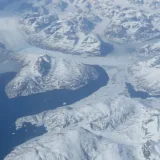 Climate · Nov 6, 2026In Greenland, a lake beneath the ice delays the release of meltwaterBeneath Flade Isblink, an invisible reservoir fills in summer and empties mainly in autumn. Satellites reveal why the date of melting alone is not enough to predict when water will arrive downstream.↗


