Looking for something?
A place, an idea, a question. Find the articles that interest you.
Articles to discover
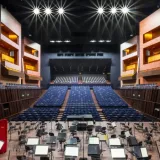 The Philharmonie: a space to listen toMovable reflectors, box towers and the presence of the audience: design archives shed light on the acoustic choices behind Luxembourg’s concert hall.
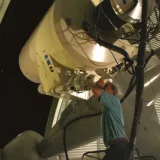 Space debris: seeing is not enoughThe ESA’s 2026 report points to more fragments that are difficult to identify. Radars, telescopes and impact traces shed light on different parts of the problem.
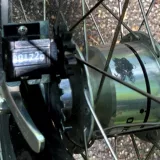 Who measures the kilometres in a race?Calibrated bicycle, shortest route and record criteria: the official distance of a race is not the same as an individual runner’s route.
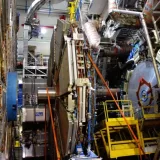 ATLAS: two photons put matter to the testA rare interaction involving W bosons has been observed in LHC data. The result, presented in September, strengthens a test of electroweak theory.
 Floods: getting satellites and sensors to work togetherThe EOVC project aims to coordinate satellite observations and ground-based data. Its first demonstration is set to focus on the Danube and France’s river network.
 Fresh water: reserves are dwindlingThe WMO’s 2025 global assessment describes river flows that are often below normal and a sustained decline in reserves. Two phenomena that should be distinguished.
 Dark matter: a signal to be confirmedThe LUX-ZEPLIN experiment has detected an unusual interaction in its data. The team wants to understand its origin, without announcing a discovery of dark matter.
 Oceans: what August’s heat record measuresCopernicus recorded an average of 21,07 °C at the ocean surface outside the polar regions in August 2026. This record, shared with March 2024, is based on ERA5; other datasets do not give it the same ranking.
 Euclid: 31 quasars to understand the Universe’s infancyThe Euclid telescope has discovered 31 very ancient quasars, including two observed when the Universe was just 670 million years old. How do these beacons reveal the first black holes?
 Fit 4 Scale: growing beyond the start-up phaseFive companies make up the first cohort of the Luxembourg programme. Their appearance at Nexus highlights the challenges of scaling up, without in itself constituting evidence of growth.
 Sleep: looking for pointers, not a perfect nightTimings, environment, daytime tiredness: a few observations can help clarify the problem. In Luxembourg, a public resource also explains when to discuss it with your doctor.
 Clothing: three things to check before you payComposition, size and care answer different questions. To choose a garment you’ll really wear, it’s best to consider all three together.