Looking for something?
A place, an idea, a question. Find the articles that interest you.
Articles to discover
 2001: A Space Odyssey: why Kubrick lets the images tell the storyThe 1968 film was developed with Arthur C. Clarke, but left out some of the screenplay’s explanations. Its history sheds light on the space it gives to images and music.
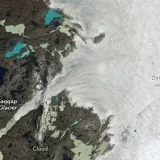 Greenland: what the 2,347 km³ of ice lost between 2010 and 2023 measuresAn analysis combining CryoSat and ICESat-2 describes the thinning of the ice sheet. It is also valuable for comparing two measurement methods.
 Sofa bed: 7 things to check before you buyDimensions when unfolded, how often it will be used for sleeping, mechanism, upholstery and returns: the checks that can help you avoid a bad purchase.
 Pain: what six million responses reveal about age and sexPain often increases fastest before the age of 55, without necessarily peaking then. A global study distinguishes patterns by body area and sex.
 Winter time: beneath the sea, animals follow different clocksOur clocks change, but the ocean does not. Yet fish, plankton and corals set their activity by the light, the tides, the Moon and the seasons.
 What Gödel’s incompleteness theorems really proveThey do not make mathematics uncertain: Gödel’s theorems set a precise limit on formal systems powerful enough to describe arithmetic.
 Laika: why her 1957 flight was a first in orbitSputnik 2 put the first animal into orbit around the Earth. Flights had taken place before it, and no return was planned for the dog: the milestones of a historic mission.
 Ibn Khaldûn: reading history by questioning accounts of powerThe Muqaddima examines the social conditions behind events. An essay by Cédric Molino-Machetto, published by Brill in 2026, offers a contextualised reading.
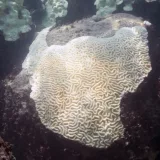 Bleached corals: why contact with a healthy clone speeds up their recoveryAn experiment at Stanford enabled five bleached fragments to recover through contact with genetically identical corals. The results are promising, but still limited to the laboratory.
 Three days of experiments at Science Days in RustFrom 22 to 24 October 2026, Science Days offers activities in German, recommended for ages ten and over.
 Health, beyond biologyIn France, a themed year brings research and schools closer together. Field measurements and analysis of information open up the subject to several disciplines.
 Sophie Adenot, from cockpit to orbitBack from her mission, the test pilot embodies a technical profession. Her career and the protocols prepared for εpsilon shed light on its demands.