Looking for something?
A place, an idea, a question. Find the articles that interest you.
Articles to discover
 Flying in the mountains: what a blue sky doesn’t tell the pilotSunshine, good visibility, and yet descending air currents or severe turbulence: in the mountains, the landscape can look welcoming while the air is much less so.
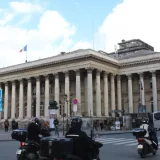 Ten-year OATs: why crossing 5% matters for France5.082% on 22 October, then 4.907% on 26 October: the French ten-year yield crossed a threshold before falling back. This market movement affects the state’s future borrowing conditions.
 Heatwave: why the body becomes exhausted when nights stay hotSweating, humidity, the heart and kidneys: understanding the body’s limits in prolonged heat and MeteoLux’s new alert system.
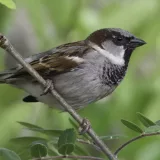 House sparrow: why its chirping is becoming rarer in some citiesEurope lost around half of its house sparrows between 1980 and 2017. What do these figures really tell us, and how should we interpret the counts from Luxembourg gardens in 2020 and 2025?
 Ana Mendieta: what film preserves of bodies and landscapesThe Siluetas are traces, but Ana Mendieta’s work also includes 104 films. The archives of two museums shed light on the role of duration and transformation.
 Ancient DNA: how encounters contributed to our adaptationFrom the Tibetan Plateau to Oceania, researchers are studying the effects of variants inherited from Denisovans. Finding a trace and demonstrating its function are two distinct steps.
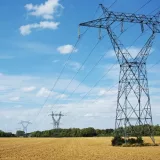 France exports electricity: is it really independent?With net exports of 92.3 TWh in 2025, France has set an electricity record. But its reliance on oil, gas and uranium tells a different story about dependence.
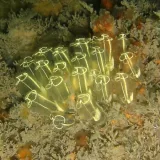 Clavelina: what these small transparent animals revealNeither plant nor deep-sea creature: the large clavelina lives in colonies and filters water. Its small translucent forms tell another story of coastal life.
 How shells preserve traces of the marine climateGrowth lines, isotopes and chemical analyses: researchers use shells as ocean archives, while taking care not to confuse local signals with the global climate.
 The solid Earth is becoming slightly less flattened: what satellites measureA study published on 9 September 2026 reveals that uplift in the polar regions accelerated between 1997 and 2015. This tiny change in the shape of the solid globe sheds light on the effects of ice and water redistribution.
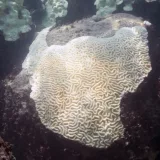 Bleached corals and jellyfish: how to read the signs of an ocean in changeNOAA confirms the scale of heat stress on reefs, but jellyfish blooms do not follow a simple global pattern. Scientists explain why.
 Breast cancer before 40: what the Artémis project in Nantes is trying to understandIn Nantes, researchers are studying cell plasticity and the organisation of tumours in young women. What this research could contribute, and what it does not yet prove.