Articles to discover
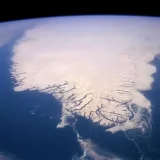 Climate · Nov 24, 2026Greenland: why are there two estimates of ice loss in 2025-2026?For September 2025 to August 2026, two methods put Greenland’s total ice loss at around 135 and 173 billion tonnes. Here is what these figures measure, why they differ and what the thirtieth consecutive year of negative mass balance means.↗
 Climate · Nov 24, 2026Why ocean CO₂ removal varies by location and seasonGlobal simulations show that ocean CO₂ removal varies by region, season and method. For some inputs combining alkalinity and dissolved carbon, some of the captured carbon can return to the atmosphere.↗
 Nature and environment · Nov 19, 2026Fishing in the North-East Atlantic: why a shared catch limit is not enoughIn the North-East Atlantic, states agree on catch limits, but not always on each country’s share. This discrepancy undermines the management of shared stocks such as mackerel.↗
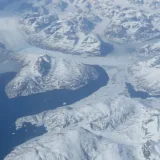 Climate · Nov 6, 2026In Greenland, a lake beneath the ice delays the release of meltwaterBeneath Flade Isblink, an invisible reservoir fills in summer and empties mainly in autumn. Satellites reveal why the date of melting alone is not enough to predict when water will arrive downstream.↗
 Climate · Oct 26, 2026The solid Earth is becoming slightly less flattened: what satellites measureA study published on 9 September 2026 reveals that uplift in the polar regions accelerated between 1997 and 2015. This tiny change in the shape of the solid globe sheds light on the effects of ice and water redistribution.↗
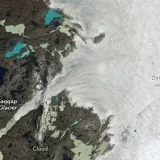 Climate · Oct 26, 2026Greenland: what the 2,347 km³ of ice lost between 2010 and 2023 measuresAn analysis combining CryoSat and ICESat-2 describes the thinning of the ice sheet. It is also valuable for comparing two measurement methods.↗
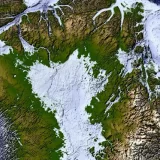 Climate · Oct 1, 2026Beneath Greenland’s ice, a network of valleys comes into focusA new method infers the buried terrain from subtle deformations in the ice surface. Nearly 2,000 valleys have been mapped, around a third of them newly identified.↗


