Looking for something?
A place, an idea, a question. Find the articles that interest you.
Articles to discover


 TOI-561 b: how Webb is investigating the clouds of a lava planetA study of infrared variations from TOI-561 b favours a highly reflective atmosphere. Here is what Webb is actually measuring, what the models explain and what remains to be verified.
 Retreating glaciers: what a map cannot tell a walkerMaps record the retreat of glaciers, but do not describe conditions on the day. From measuring climate change to unstable terrain and route planning, here are the key distinctions to bear in mind.
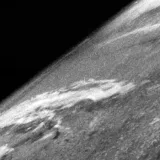 The first photograph of Earth from space: what the 1946 flight showedA camera aboard a V-2 photographed Earth on 24 October 1946, from an altitude of about 105 kilometres. A suborbital flight, long before images of the entire globe.
 Weather and AI: what Dubai and forecasts several weeks ahead revealTwo studies from October 2026 shed light on progress in AI forecasting. Their findings relate to specific models, lead times and tests.
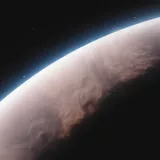 WASP-17 b: Webb reconstructs a more extended atmosphere on the evening sideA transit-mapping method distinguishes several regions along the edge of the atmosphere. It refines measurements without providing a photograph or a complete weather report for this gas giant.
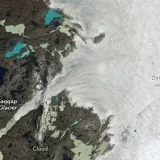 Greenland: what the 2,347 km³ of ice lost between 2010 and 2023 measuresAn analysis combining CryoSat and ICESat-2 describes the thinning of the ice sheet. It is also valuable for comparing two measurement methods.
 After a storm: precautions to take in Luxembourg’s forestsCalmer weather does not necessarily make a path safe. Weakened trees, hanging branches, closures: useful guidance before heading out.Lenticular clouds: why do they seem to stand still in the wind?Their lens-shaped form sometimes stays in place while air flows through them. Condensation, terrain and mountain waves explain this apparent paradox.
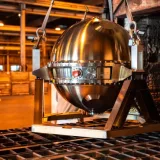 DAVINCI: why NASA is preparing a probe for Venus’s 465°C heatA DAVINCI capsule has withstood 465°C six times in ground tests. NASA wants to understand how Venus evolved and whether it once had liquid water.