Looking for something?
A place, an idea, a question. Find the articles that interest you.
Articles to discover


 Retreating glaciers: what a map cannot tell a walkerMaps record the retreat of glaciers, but do not describe conditions on the day. From measuring climate change to unstable terrain and route planning, here are the key distinctions to bear in mind.
 CO₂ record in 2025: why the atmosphere continues to accumulate greenhouse gasesThe WMO reports a new record for CO₂, methane and nitrous oxide in 2025. What concentrations actually measure and what NOAA’s independent readings show.
 How shells preserve traces of the marine climateGrowth lines, isotopes and chemical analyses: researchers use shells as ocean archives, while taking care not to confuse local signals with the global climate.
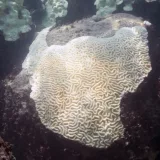 Bleached corals and jellyfish: how to read the signs of an ocean in changeNOAA confirms the scale of heat stress on reefs, but jellyfish blooms do not follow a simple global pattern. Scientists explain why.
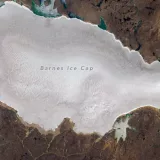 Barnes Ice Cap: why researchers speak of an interrupted glaciationPlants preserved beneath the ice trace an ancient advance, followed by a retreat. The finding sheds light on a slow process, without heralding an imminent deep freeze.
 Oceans: what August’s heat record measuresCopernicus recorded an average of 21,07 °C at the ocean surface outside the polar regions in August 2026. This record, shared with March 2024, is based on ERA5; other datasets do not give it the same ranking.
 El Niño 2026–2027: reading the forecast at the right scaleThe WMO expects El Niño to strengthen and persist until February. This global climate signal does not, on its own, describe the winter in store for Luxembourg.