Articles to discover
 Environment · Nov 26, 2026Drinking water in Luxembourg: why the AGE is exploring the Moselle optionLuxembourg relies on its groundwater and the Upper Sûre. The director of the Water Management Administration sets out options for protecting these resources and examining a supply from the Moselle.↗
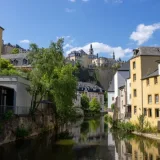 Environment · Nov 24, 2026River water abstraction: what the lifting of the suspension changesThe suspension of permits to abstract water from rivers has been lifted since 24 November. Abstraction still requires a permit, while the administration warns that water levels could still fall very low between periods of rain.↗
 Nature and environment · Nov 24, 2026In the Tunari, women are replanting trees in their watershedsIn Bolivia’s Tunari region, nearly 500,000 young Kewiñas are reported to have been planted since 2022. The figure measures the effort made, not yet the effect of the trees on water.↗
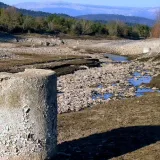 Climate · Nov 24, 2026Why don’t autumn rains replenish groundwater quickly?Autumn rains do not immediately replenish groundwater. On 15 November 2026, the BRGM was still recording falling levels at 42% of the monitoring points, with significant differences between regions and types of subsoil.↗
 Climate · Nov 24, 2026Why Lorraine remains dry despite autumn rainLorraine’s soils remain dry and several aquifers are at very low levels. Autumn rain is not replenishing all reserves at the same rate.↗
 Environment · Nov 23, 2026Havant Thicket: how much water can a reservoir really supply?Havant Thicket will be able to store up to 8.7 billion litres, but this volume does not correspond to what it will supply each day. The flow rate announced for the reservoir and that of a project combining several infrastructure schemes do not refer to the same resource.↗
 Environment · Nov 21, 2026Why the rain on 6 November flooded ColomboIn Colombo, the flooding on 6 November followed hourly rainfall far above the stated capacity of the stormwater network. Wetlands can hold some of the water, but their role also depends on their condition and on planning decisions.↗
 Environment · Nov 13, 2026Eisenborn: what the decision on the 380 kV line changesThe new route near Eisenborn avoids an additional environmental report, subject to conditions. Pylons, forest, water and neighbours: the documented trade-offs behind the decision of 9 November.↗
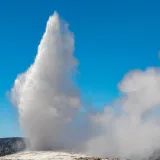 Basic science · Nov 10, 2026Supervolcanoes: what monitoring signals can predictEarthquakes, ground deformation and gas emissions help volcanologists monitor large volcanic systems. But detecting unusual activity is not the same as dating a super-eruption.↗
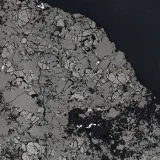 Space · Nov 8, 2026Teghaza 001, a meteorite that takes us back to Mars’s earliest rocksFound in Mali, Teghaza 001 contains minerals at least 4.1 billion years old. Its zircons and traces of alteration by water offer a rare window into Mars’s ancient crust.↗
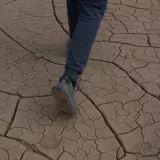 Climate · Oct 27, 2026Drought: why rain is not always enoughFrance’s September 2026 assessment shows a marked deficit. But rainfall, soil moisture and groundwater levels do not measure the same thing.↗
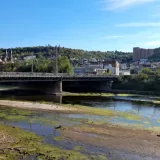 Climate · Oct 2, 2026Fresh water: reserves are dwindlingThe WMO’s 2025 global assessment describes river flows that are often below normal and a sustained decline in reserves. Two phenomena that should be distinguished.↗


