Articles to discover
 Space · Nov 25, 2026Why Hubble is cataloguing stars ahead of Roman’s surveyBefore Roman surveys the centre of the Milky Way, Hubble is cataloguing its stars. These baseline observations should help interpret the microlensing events and exoplanets they could reveal.↗
 Space · Nov 25, 2026Why a white dwarf could appear greenA white dwarf is said to be green not because a telescope photographed it that way, but because researchers calculated its apparent colour from its spectrum and a model of human vision.↗
 Space · Nov 24, 2026A candidate red dot observed in the Universe when it was 450 million years oldThe spectrum of CW-LRD-z10 places this little red dot candidate at about 450 million years after the Big Bang. Its distance has been specified, but its nature remains to be established.↗
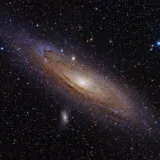 Space · Nov 19, 2026In Andromeda, how astronomers supported the case for two stars mergingObservations made since 2023, supplemented by James Webb’s infrared data, support the case for two stars merging in Andromeda. Here is what the measurements establish and what remains a reconstruction.↗
 Space · Nov 12, 2026UVEX, the telescope that will map the ultraviolet sky and track cosmic explosionsCommissioned by NASA in October 2026, the UVEX mission is set to map the ultraviolet sky and rapidly turn towards certain cosmic explosions. Its launch is still scheduled by January 2031.↗
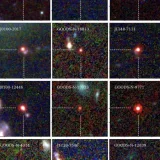 Space · Nov 8, 2026Little red dots: an X-ray clue in the young UniverseA very distant red object emits X-rays: an anomaly observed by Chandra and Webb that could shed light on the nature of the little red dots in the young Universe, without yet solving their mystery.↗
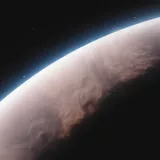 Space · Oct 26, 2026WASP-17 b: Webb reconstructs a more extended atmosphere on the evening sideA transit-mapping method distinguishes several regions along the edge of the atmosphere. It refines measurements without providing a photograph or a complete weather report for this gas giant.↗
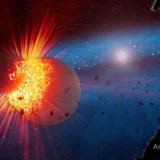 Space · Oct 26, 2026Webb: reading planetary collisions in stardustA study of 21 debris discs distinguishes several mineral signatures. Astronomers infer collisions between large rocky bodies, without observing them directly.↗
 Health · Oct 25, 2026Sugar and antibiotics: what a study of transplant patients showsHigher sugar consumption was associated with lower bacterial diversity while taking antibiotics. This finding in patients with blood cancer calls for clinical trials.↗
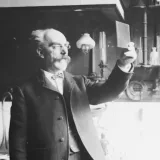 Profiles & stories · Oct 21, 2026Gabriel Lippmann: light captured in memoryBorn in Hollerich, the physicist fixed colours in photographic plates. Their study still brings together optical research and museum work.↗
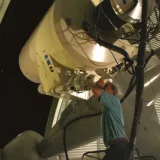 Space · Oct 20, 2026Space debris: seeing is not enoughThe ESA’s 2026 report points to more fragments that are difficult to identify. Radars, telescopes and impact traces shed light on different parts of the problem.↗
 Basic science · Oct 2, 2026Euclid: 31 quasars to understand the Universe’s infancyThe Euclid telescope has discovered 31 very ancient quasars, including two observed when the Universe was just 670 million years old. How do these beacons reveal the first black holes?↗


