Looking for something?
A place, an idea, a question. Find the articles that interest you.
Articles to discover

 Biodiversity: what satellites can measure, and what needs checking on the groundThe ESA is strengthening its ecosystem-monitoring tools. But a protected area on a map does not, by itself, prove that nature is doing better there. Here’s how to read this new data.
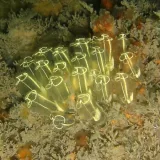 Clavelina: what these small transparent animals revealNeither plant nor deep-sea creature: the large clavelina lives in colonies and filters water. Its small translucent forms tell another story of coastal life.
 Why the bolinche encircles shoals of sardinesA fish that lives in open water, a life in shoals and a net that closes underneath: understanding the link between sardines and this professional fishing technique.
 How shells preserve traces of the marine climateGrowth lines, isotopes and chemical analyses: researchers use shells as ocean archives, while taking care not to confuse local signals with the global climate.
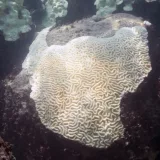 Bleached corals and jellyfish: how to read the signs of an ocean in changeNOAA confirms the scale of heat stress on reefs, but jellyfish blooms do not follow a simple global pattern. Scientists explain why.
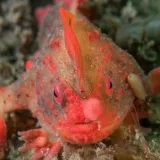 Photo Ark: why the 18,000-species milestone is more than a collection of imagesJoel Sartore’s project reached this milestone in August 2026 with a red handfish. His approach gives a place to smaller species that are often less visible.Bleached corals: why contact with a healthy clone speeds up their recoveryAn experiment at Stanford enabled five bleached fragments to recover through contact with genetically identical corals. The results are promising, but still limited to the laboratory.
 Biodiversity: counting species is not enoughA review of 423 studies examines the functions of biodiversity.