Articles to discover
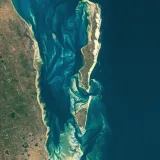 Nature and environment · Nov 25, 2026How do ancient coastal forests become marine habitats?In Mozambique, ancient peat deposits form underwater reliefs colonised by marine life. A study at Bazaruto sets out what distinguishes these habitats from coral reefs, and what the observations do not yet allow us to conclude.↗
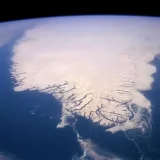 Climate · Nov 24, 2026Greenland: why are there two estimates of ice loss in 2025-2026?For September 2025 to August 2026, two methods put Greenland’s total ice loss at around 135 and 173 billion tonnes. Here is what these figures measure, why they differ and what the thirtieth consecutive year of negative mass balance means.↗
 Music · Nov 24, 2026‘Werther’: three excerpts to follow Massenet’s operaThree France Musique excerpts chart Werther, from Act I to the famous aria in Act III. A guide to finding Benjamin Bernheim’s recording and distinguishing it from the production announced by the Paris Opera.↗
 Books · Nov 22, 2026Mon Imam: why Sabyl Ghoussoub calls it a book about loveIn an interview with franceinfo, Sabyl Ghoussoub explains why his romance about Imam Moussa Sadr is part of a book he describes as a broader declaration of love for Lebanon and its people.↗
 Environment · Nov 22, 2026Chinese forests: why the foliage gap falls from 65.8% to 4.6%The leaf cover of planted forests in China increased 65.8% faster than that of natural forests between 2000 and 2022. At comparable ages and under comparable conditions, the estimated gap falls to 4.6%, and does not measure the carbon stored.↗
 Performing arts · Nov 22, 2026Homo naledi: what can we conclude from 23 fossil teeth?Analysis of 23 Homo naledi teeth revealed no protein marker associated with the Y chromosome. This finding supports the identification of female individuals, without establishing the composition of the entire species or explaining the presence of the remains in a cave.↗
 Environment · Nov 21, 2026Reef fish: why the fate of carbonates variesReef fish excrete mineral carbonates whose quantity and composition vary with their size, gut and temperature. Their fate then depends on their solubility and the marine environment.↗
 Economy · Nov 12, 2026Civil service: Mosar wants to review the replacement of staff retiringLaurent Mosar’s proposal not to automatically replace every member of staff who retires raises a question of how to balance workforce changes, service quality and public investment.↗
 Climate · Nov 6, 2026Arctic methane: why estimates are not yet telling the same storyThe AMPAC-Net review highlights a gap between two methods of estimating emissions. Understanding this difference means distinguishing stored carbon, released gases and measurements in the atmosphere.↗
 Climate · Nov 6, 2026Aviation and climate: why changing fuel does not solve the whole equationA study compares aviation pathways with planetary boundaries. To understand its findings, we need to look at fuel life cycles, the resources used and traffic assumptions.↗
 Sport · Nov 6, 2026Brive after Nevers: collective response must be confirmed against DaxWinners 33–12 at Nevers with five tries, CAB ended a run of three defeats. Olding’s return accompanies a response that must now be sustained.↗
 Space · Nov 1, 2026TOI-561 b: how Webb is investigating the clouds of a lava planetA study of infrared variations from TOI-561 b favours a highly reflective atmosphere. Here is what Webb is actually measuring, what the models explain and what remains to be verified.↗


