Articles to discover
 Environment · Nov 26, 2026Marine biodiversity: in Bruges, the species science is still trying to describeIn Bruges, discussions on nematodes, environmental DNA and taxonomy highlighted a less visible issue in marine conservation: knowing which species live in the oceans, and how to identify them.↗
 Nature and environment · Nov 25, 2026Sharks: ICCAT agreement strengthens rules, but with conditionsFrom 2027, ICCAT will require sharks landed fresh to have their fins naturally attached. For frozen sharks, the compromise provides for options and a move towards a comprehensive rule, subject to conditions.↗
 Climate · Nov 25, 2026How do satellites detect tidal variations along a beach?Satellite images make it possible to estimate tide levels in segments of around 100 metres along the coastlines studied. A bay in New Zealand reveals a difference of close to a metre, a useful signal for better understanding local risks, but not in itself a flood forecast.↗
 Environment · Nov 24, 2026Marine conservation: representation also matters in decision-makingIn Edinburgh, the international congress on marine conservation highlighted an issue of representation: according to the organisers, 17% of delegates came from less industrialised countries. Discussions also covered funding and turning knowledge into action.↗
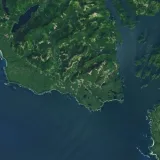 Nature and environment · Nov 22, 2026Why the water turns turquoise near Vancouver IslandA turquoise patch observed near Nootka Island in April 2025 is linked to Pacific herring spawning. What the satellite image shows, and what it cannot tell us.↗
 Basic science · Nov 21, 2026What Antarctic zircons reveal about Gondwana’s vanished mountainsZircons from Antarctic sediments reveal episodes of mountain formation linked to Gondwana. Researchers are examining their possible role in environmental changes during the Cambrian, without demonstrating a direct causal link.↗
 Climate · Nov 20, 2026How combined atmospheric phenomena can amplify extreme rainfallA study of three regions in the Northern Hemisphere shows how the interaction of several atmospheric systems can contribute to the projected increase in extreme precipitation. Here is what its findings measure and what they do not allow us to conclude at local level.↗
 Basic science · Nov 20, 2026How marine cores help us read ancient climatesThe cores collected by the CHARM mission contain clues about ancient climates. Here is how scientists interpret them, and why these sediments cannot yet provide conclusions on their own.↗
 Nature and environment · Nov 19, 2026Fishing in the North-East Atlantic: why a shared catch limit is not enoughIn the North-East Atlantic, states agree on catch limits, but not always on each country’s share. This discrepancy undermines the management of shared stocks such as mackerel.↗
 Nature and environment · Nov 14, 2026Gulf of Panama: what the missed cooling of 2025 revealsA study documents a sharp reduction in cold-water upwelling in 2025. Wind, nutrients and reefs: understanding the mechanism without confusing risk with measured damage.↗
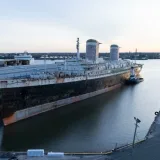 Nature and environment · Nov 12, 2026Can the SS United States become a marine habitat?The SS United States was sunk off the coast of Florida to become an artificial reef. A hull can provide a surface and shelter for marine life, but this does not mean that coral reefs have been restored or that biodiversity has increased.↗
 Nature and environment · Nov 7, 2026Bleached corals: what the contact experiment really showedA laboratory experiment at Stanford describes how symbiotic algae moved between healthy and bleached corals via a tissue bridge. The findings shed light on one possible route to recovery, without demonstrating a method that can be applied to reefs in the sea.↗


