Articles to discover
 Basic science · Nov 10, 2026Why can a dense crowd start to sway?Crowd measurements in Pamplona reveal that a critical density can give rise to coordinated orbital movements. A model explains the role of confinement and a particular kind of friction.↗
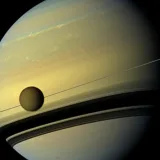 Space · Nov 8, 2026Dragonfly: a name bound for Titan, and a prebiotic chemistry missionNASA invites you to send your name aboard a Dragonfly chip. Scheduled to reach Titan in 2034, the probe is to fly between several sites and analyse their prebiotic chemistry.↗
 Science · Nov 8, 2026Petrichor: how rain brings the smell of the earth to the surfaceMolecules from soil and plants contribute to the smell of rain. Experiments filmed at very high speed shed light on how raindrops set them circulating again.↗
 Space · Nov 2, 20262026 ED138: what the candidate for dwarf-planet status really revealsSpotted in Rubin data, this distant body also appears in TESS archives. Its orbit is becoming clearer, but its size and shape remain to be established.↗
 AI · Nov 1, 2026OpenAI and Yang–Mills: understanding the announcement without confusing the evidenceOpenAI claims to have proved existence in quantum physics. The Yang–Mills problem also requires a mass gap: here are the key distinctions for understanding the announcement.↗
 Innovation · Nov 1, 2026CEA Grenoble: from former reactors to the technologies of tomorrowWhy did CEA Grenoble change direction? From dismantled reactors to the FAMES pilot line, a change of focus to distinguish from ILL’s activities.↗
 Innovation · Nov 1, 2026An ultrasound tube guides matter through the air: what the Helsinki prototype demonstratesEight centimetres, 256 emitters and 50 watts: a prototype guides matter without a wall. Its potential and the steps still needed before industrial use.↗
 AI · Nov 1, 2026AI and scientific evidence: what Lean checks, and what still needs examiningOpenAI’s announcements have revived the question of evidence produced by AI. The logical core, assumptions and results of AlphaProof: key points for assessing them.↗
 Basic science · Oct 28, 2026Claude Cohen-Tannoudji: cooling atoms to understand them betterThe physicist, who died on 22 October 2026 aged 93, helped turn light into a tool for controlling atoms. His legacy brings together experiments, theory and teaching.↗
 Nature and environment · Oct 27, 2026Why soaring can take less energy than swimming: what 38 species revealA study published in October 2026 compares 17 years of movements by birds and bats. The condor barely flaps its wings, but its efficiency depends on air currents.↗
 Space · Oct 26, 2026Why Star Wars spacecraft don’t look like real rocketsStaged rockets, the heat of atmospheric re-entry, life on board and the speed of light: what physics really allows spacecraft to do.↗
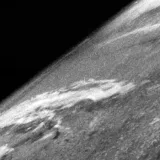 Space · Oct 26, 2026The first photograph of Earth from space: what the 1946 flight showedA camera aboard a V-2 photographed Earth on 24 October 1946, from an altitude of about 105 kilometres. A suborbital flight, long before images of the entire globe.↗


