Articles to discover
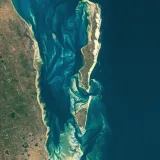 Nature and environment · Nov 25, 2026How do ancient coastal forests become marine habitats?In Mozambique, ancient peat deposits form underwater reliefs colonised by marine life. A study at Bazaruto sets out what distinguishes these habitats from coral reefs, and what the observations do not yet allow us to conclude.↗
 Environment · Nov 24, 2026Marine conservation: representation also matters in decision-makingIn Edinburgh, the international congress on marine conservation highlighted an issue of representation: according to the organisers, 17% of delegates came from less industrialised countries. Discussions also covered funding and turning knowledge into action.↗
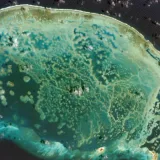 Nature and environment · Nov 22, 2026At Arrecife Alacranes, what a patrol can really protectAt Arrecife Alacranes, patrols can spot boats, check permits and document suspected offences. They cannot replace the authorities’ procedures or monitoring of coral health.↗
 Environment · Nov 21, 2026Reef fish: why the fate of carbonates variesReef fish excrete mineral carbonates whose quantity and composition vary with their size, gut and temperature. Their fate then depends on their solubility and the marine environment.↗
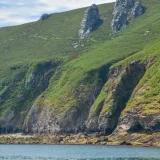 Nature and environment · Nov 21, 2026On Lundy, two different forms of protection for birds and marine lifeOn Lundy, protection combined rat eradication with a no-take marine zone. The reported results are notable, but the monitoring methods remain poorly detailed.↗
 Basic science · Nov 21, 2026How gut bacteria could help fish form carbonatesIn the Gulf toadfish, a study suggests that gut bacteria play a part in the formation of calcium carbonate deposits. The extent of this mechanism beyond this species and the laboratory experiment remains to be measured.↗
 Environment · Nov 20, 2026American Samoa: what is the $6 million seabed auction worth?The winning bids for two areas off American Samoa total $6 million. The timetable for the leases still depends on administrative and legal proceedings.↗
 Nature and environment · Nov 14, 2026Gulf of Panama: what the missed cooling of 2025 revealsA study documents a sharp reduction in cold-water upwelling in 2025. Wind, nutrients and reefs: understanding the mechanism without confusing risk with measured damage.↗
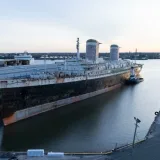 Nature and environment · Nov 12, 2026Can the SS United States become a marine habitat?The SS United States was sunk off the coast of Florida to become an artificial reef. A hull can provide a surface and shelter for marine life, but this does not mean that coral reefs have been restored or that biodiversity has increased.↗
 Nature and environment · Oct 26, 2026Bleached corals and jellyfish: how to read the signs of an ocean in changeNOAA confirms the scale of heat stress on reefs, but jellyfish blooms do not follow a simple global pattern. Scientists explain why.↗
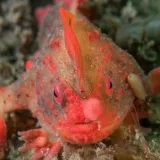 Nature and environment · Oct 26, 2026Photo Ark: why the 18,000-species milestone is more than a collection of imagesJoel Sartore’s project reached this milestone in August 2026 with a red handfish. His approach gives a place to smaller species that are often less visible.↗


