Articles to discover
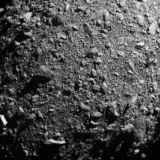 Space · Nov 26, 2026Dimorphos: Hera images reveal traces of DART’s impactHera’s close-up images show a crater that has flattened one face of Dimorphos, and boulders around the asteroids. What they reveal, and what they cannot measure on their own.↗
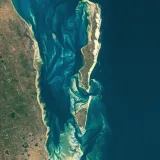 Nature and environment · Nov 25, 2026How do ancient coastal forests become marine habitats?In Mozambique, ancient peat deposits form underwater reliefs colonised by marine life. A study at Bazaruto sets out what distinguishes these habitats from coral reefs, and what the observations do not yet allow us to conclude.↗
 Space · Nov 25, 2026LUPEX: how Japan’s rover will search for water at the Moon’s south poleScheduled for no earlier than 2028, the LUPEX mission is set to measure the quantity and form of water at the lunar south pole. Here is what the Japanese rover will seek to establish, and what its prototype does not yet allow us to conclude.↗
 Climate · Nov 25, 2026How do satellites detect tidal variations along a beach?Satellite images make it possible to estimate tide levels in segments of around 100 metres along the coastlines studied. A bay in New Zealand reveals a difference of close to a metre, a useful signal for better understanding local risks, but not in itself a flood forecast.↗
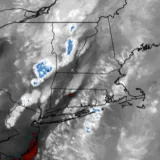 Climate · Nov 25, 2026In New England, summer rainfall is changing its rhythmIn New England, total summer rainfall has changed little in 40 years, but prolonged rain has declined in favour of shorter, more intense showers. This shift could increase the risk of flash floods.↗
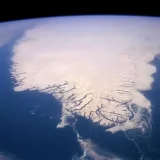 Climate · Nov 24, 2026Greenland: why are there two estimates of ice loss in 2025-2026?For September 2025 to August 2026, two methods put Greenland’s total ice loss at around 135 and 173 billion tonnes. Here is what these figures measure, why they differ and what the thirtieth consecutive year of negative mass balance means.↗
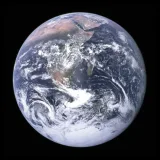 Climate · Nov 24, 2026Why does the same day show +1.33 °C and +2.23 °C?On 22 November 2026, a global average of 14.48 °C corresponds to +1.33 °C compared with 1991–2020. The +2.23 °C reported for the same day uses a different, pre-industrial reference and a separate estimate.↗
 Living · Nov 24, 2026MeteoLux: how to distinguish forecasts, warnings and alertsMeteoLux’s website is due to be revamped on 26 November, with north–south forecasts, ten-day outlooks and a LU-Alert banner. Here’s how to distinguish a forecast, an observation, a warning and an alert.↗
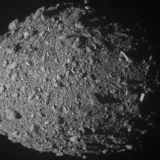 Space · Nov 24, 2026Hera: can images of Dimorphos reveal the effect of DART?Images of Dimorphos due to be unveiled on 25 November could help distinguish between a localised crater and global reshaping. To understand DART’s impact, Hera will also need to measure the asteroid’s mass and probe its interior.↗
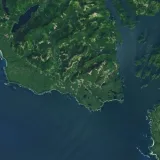 Nature and environment · Nov 22, 2026Why the water turns turquoise near Vancouver IslandA turquoise patch observed near Nootka Island in April 2025 is linked to Pacific herring spawning. What the satellite image shows, and what it cannot tell us.↗
 Environment · Nov 22, 2026Chinese forests: why the foliage gap falls from 65.8% to 4.6%The leaf cover of planted forests in China increased 65.8% faster than that of natural forests between 2000 and 2022. At comparable ages and under comparable conditions, the estimated gap falls to 4.6%, and does not measure the carbon stored.↗
 Science · Nov 21, 2026How an aircraft can open a hole in a cloud layerA cavum, the sometimes spectacular hole in a cloud layer, can be triggered by an aircraft passing through. Here’s how supercooled water, cooling and falling ice crystals shape this opening.↗


