Articles to discover
 Environment · Nov 26, 2026Med Emre: what we know about the pollution risk off IbizaThe Med Emre was found capsized but still afloat off Ibiza. Observations at sea, its cargo and emergency plans do not mean the same thing: no fuel spill had been confirmed in the information published on 26 November.↗
 Environment · Nov 26, 2026Marine biodiversity: in Bruges, the species science is still trying to describeIn Bruges, discussions on nematodes, environmental DNA and taxonomy highlighted a less visible issue in marine conservation: knowing which species live in the oceans, and how to identify them.↗
 Nature and environment · Nov 25, 2026Sharks: ICCAT agreement strengthens rules, but with conditionsFrom 2027, ICCAT will require sharks landed fresh to have their fins naturally attached. For frozen sharks, the compromise provides for options and a move towards a comprehensive rule, subject to conditions.↗
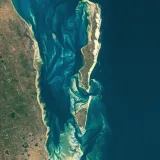 Nature and environment · Nov 25, 2026How do ancient coastal forests become marine habitats?In Mozambique, ancient peat deposits form underwater reliefs colonised by marine life. A study at Bazaruto sets out what distinguishes these habitats from coral reefs, and what the observations do not yet allow us to conclude.↗
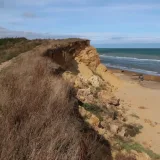 Climate · Nov 25, 2026In the face of coastal erosion, preparing to adapt beyond sea defencesTwelve English projects, funded until 2029, combine cliff monitoring, infrastructure adaptation and community preparedness. A response to erosion that goes beyond protective structures.↗
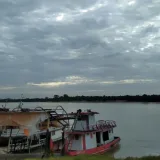 Climate · Nov 25, 2026In Roraima, drought makes access to water and remote villages more difficultIn northern Brazil, falling water levels in the Rio Branco and its tributaries are making travel and access to water more difficult in remote villages. The ANA has declared a water shortage on two rivers until 30 April 2027.↗
 Environment · Nov 25, 2026Biodiversity: how scientific vocabulary has evolvedAn analysis of 60,000 scientific articles highlights the growing use of terms associated with biodiversity management. What does this change measure, and what does it not allow us to conclude?↗
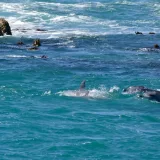 Nature and environment · Nov 25, 2026Among Shark Bay’s dolphins, consistency in group size is associated with longevityAt Shark Bay, nearly 40 years of observations link consistency in dolphins’ preferred group size with longevity, without establishing causation.↗
 Climate · Nov 25, 2026How do satellites detect tidal variations along a beach?Satellite images make it possible to estimate tide levels in segments of around 100 metres along the coastlines studied. A bay in New Zealand reveals a difference of close to a metre, a useful signal for better understanding local risks, but not in itself a flood forecast.↗
 Nature and environment · Nov 25, 2026In Dissay, supposedly biodegradable sleeves protect young plantsIn Dissay, an 80-metre hedge was planted using sleeves described as biodegradable. Their performance remains to be assessed, as does the growth of the plants.↗
 Climate · Nov 25, 2026Heat and wildfire smoke: why measure their combined impact?A global study covering 2000-2019 distinguishes between people exposed, cumulative days and trends. In Indonesia, the observed increase is mainly due to more frequent co-exposures.↗
 Environment · Nov 25, 2026In Moselle, measuring heating to better understand comfort in homesIn Moselle, La Sainte-Barbe is equipping substations and reference homes to bring heating-system operation into closer alignment with indoor temperatures. The system helps with management, but the published information does not yet quantify its effects on consumption.↗


