After the vote, who oversees European laws?
Does a law achieve its aim once it has been passed? A September 2026 research briefing explains how the European Parliament can hold the executive to account.
L’actualité, les repères et les regards de la rédaction.
Does a law achieve its aim once it has been passed? A September 2026 research briefing explains how the European Parliament can hold the executive to account.
Niels Fenger is reappointed to the Court of Justice for 2027–2033. Andria Buhagiar and Ivan Stoynev are appointed to the General Court for terms ending in 2031.
On 5 October 2026, UNESCO puts teachers’ status at the heart of World Teachers’ Day. Recognition, autonomy and material resources provide three points of discussion.
Culture, media, democratic participation: the mandate adopted by the Council on 12 May 2026 sets out a shared programme. It does not, by itself, settle its funding.
The European reform adopted in May is aimed at the procedures that hinder municipal voting by citizens living in another Member State. The right already exists; the challenge is to exercise it.
Meeting in New York on 20 September, the three partners linked peace, finance and food. The communiqué sets out priorities, but does not prove they have been achieved.
The Council set out its position on 30 September. Pesticide residues, authorisations and checks are part of a dossier that is still under negotiation.
The Council is preparing European support for 2028–2034. Its partial position concerns the rules; the overall budget remains to be negotiated.
After the UN meeting on 25 September, an annex remains to be negotiated. It must link the sharing of pathogens with the sharing of medical benefits.
The 2025 figures published by the WHO on 29 September show an increase in deaths. Behind the totals, access to water and healthcare remains central.
The WHO publishes a guide for mass gatherings. Water, shade, movement and emergency care must be planned together, well before the public arrives.
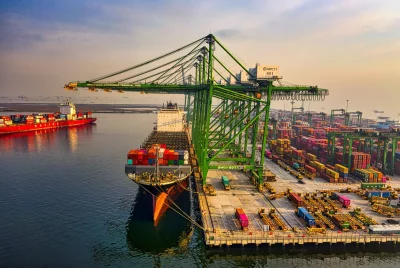
The WTO lists connections combining ships, roads and rail. These solutions shed light on how trade flows are being reorganised, without guaranteeing stable delivery times or prices.