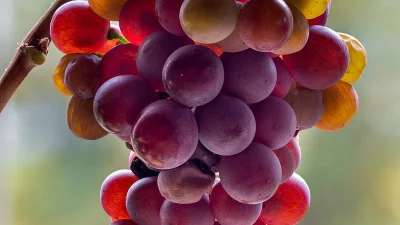
In Marolles, in Calvados, a vineyard established three years ago is producing its second harvest and reports a rapid commercial start. The venture is led by Sébastien Fricker, a winegrower from Saumur. The report places it in a broader context: a wine map that climate change and the historic drought of summer 2026 are reshaping in France.
His move is first and foremost a personal choice of adaptation. The fifth generation of winegrowers in his family, he left the family estate in Saumur to start from scratch in his wife Claire’s home region, around 200 kilometres further north. He says he has found a cooler climate there, similar to that of the Loire Valley twenty years ago and suited to producing less alcoholic wines, as well as clay-limestone soil capable of retaining moisture.
The project was also a major financial gamble. In 2021, according to the report, no bank agreed to back him. He then sold all his wine-related businesses in the Loire Valley to finance the venture. After several months of searching, he chose a 4-hectare plot planted with old apple trees, which had to be completely cleared before he planted 20,000 vines there, including Chardonnay and Chenin.
In total, he says he invested 1 million euros without being sure of the site’s true potential. He explains that he began to test whether the gamble would pay off during the first harvest in 2025, by tasting the grapes. His assessment is positive: he says he found flavour and a convincing aromatic profile.
The first commercial test, meanwhile, is presented as a success. The first three white wine cuvées, released last spring, amount to 12,000 bottles. Three quarters were sold in a month and a half.
The report also highlights a local shift: residents, initially sceptical, are now volunteering for the harvest, even though they had to be taught a task that was new in a region of apples rather than grapes.
These details come from an extract of “Farmers: reinventing themselves in the face of the climate”, a report announced by France Télévisions for “Envoyé spécial” on 22 October 2026.


