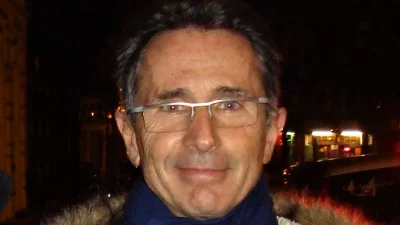
In Perpignan, Hassan Khaloufi is working on a transition that is often less visible than the stage itself: the one that takes someone from personal artistic practice to meeting professionals. A rapper known as Hassan Monkey, he runs Maison Soleil, an association that aims to support emerging cultures. His journey connects neighbourhoods in the city, music and studies at Sciences Po, without any one of these experiences eclipsing the others.
The portrait broadcast by ICI Roussillon on 28 October 2026 highlights this movement between worlds. The issue goes beyond discovering an exceptional talent: how can we create opportunities for someone already committed to an artistic practice to make progress, meet a teacher or take part in a collective production?
A journey between several worlds
ICI links Hassan Khaloufi’s childhood to Saint-Mathieu, Saint-Jacques and La Réal. The broadcaster dates his first experiences on the mic to the age of eleven, alongside Perpignan rapper Némir. Higher education came later in this account, but it did not bring his music to an end.
This journey deserves better than a contrast between the neighbourhood and education. Presenting Sciences Po as an escape that made everything else secondary would obscure the thread running through his current work: building relationships between communities that do not necessarily meet. Rap is presented here as a creative experience, not an obstacle he had to overcome.
In a report published by Made in Perpignan in September 2025, Hassan Khaloufi had already explained that he had spent time in different educational and artistic environments. Journalist Philippe Becker described his return to Perpignan and how his own musical journey had enabled him to build relationships that were useful to other artists. This account sheds light on a professional practice; it does not sum up his entire biography.
Maison Soleil: from practice to support
The same report covered the creation of Maison Soleil with Marc-Antoine Vial. The stated ambition was to connect amateur practice, meetings between artists and support towards professionalisation. The founders also wanted to avoid limiting their projects to a single community, making room for residents of neighbourhoods as well as rural audiences.
These intentions provide a framework for the association, but do not in themselves amount to a record of results. An open workshop, a meeting with a professional and an artistic activity that has become paid work are three different stages. Distinguishing between them makes it possible to assess what a cultural initiative actually delivers, beyond the announcement of a new venue or event.
For an emerging artist, the need may arise before the stage: finding someone to talk to, understanding where to work, or testing a solitary practice against other skills. A support organisation also has a role to play in these less spectacular moments. This is the function that Maison Soleil’s representatives place at the heart of their project in their statements.
A piano and a meeting recounted on the radio
The ICI Roussillon portrait gives a specific example: during a workshop, piano teacher Franck Garcia, from the conservatoire, is said to have spotted a young self-taught musician who had been practising on a small instrument. The radio presents the episode as a meeting between a practice developed in a neighbourhood and a teacher able to recognise its potential.
We did not attend this workshop. This account does not allow us to predict the young musician’s future career or describe what happened to him afterwards. Its interest lies in the mechanism it illustrates: a skill can exist before an institution identifies it, and a meeting can open up a further learning opportunity.
In this portrait, Hassan Khaloufi advocates an exchange in both directions between neighbourhoods and the conservatoire. This idea shifts the focus: it is not just about bringing an audience to a cultural venue, but also about recognising the practices that are already developing elsewhere. It gives coherence to the transition from rapper to mentor.
‘Amunt’, a collective work in preparation
The ‘Amunt’ project extends this approach in the form of a musical. In his own public presentation, Hassan Khaloufi describes it as an intergenerational, multicultural production involving residents of Perpignan’s priority neighbourhoods, in collaboration with the community centres.
The planned participation is not limited to performers. Sets, costumes and artistic practices are among the contributions mentioned. This distribution matters: a collective production can give a role to someone who wants to make things, organise or learn a backstage skill, and not only sing in front of an audience.
The stated aim is to create a demanding show. It remains an aim: the sources consulted provide no final report, confirmed cast or confirmed performance date. Casting announcements published in October should therefore not be presented as permanent opening hours. Anyone interested should check the current arrangements with Maison Soleil.
The thread running through this journey can be seen in practical work: connecting people, places and skills. The next steps will be observable — workshops held, participants supported, and a production actually presented. Hassan Khaloufi’s project gains nothing from becoming a tale of instant success. It becomes more interesting when we look at how these opportunities to work together are built.
Illustrative photograph: Saint-Jacques church in Perpignan, viewed from the Jardin de la Miranda in July 2016. It locates one of the neighbourhoods mentioned and does not show Maison Soleil’s premises.