After a long day sitting or standing, some people feel heaviness in their legs, sometimes accompanied by swollen ankles. Immobility can contribute to these sensations. But “heavy legs” is not a single diagnosis, and no exercise can, on its own, determine the cause.
For problems related to venous return, moving regularly is a simple measure generally recommended by healthcare professionals. But it is important to understand why it may help, under what conditions, and which signs instead require prompt medical advice.
The subtle role of the calves in circulation
Blood flowing through the veins in the legs must travel back up to the heart. The function of the venous valves and contractions of the calf muscles help this return. When we walk, the muscles compress the deep veins and then relax: this is known as the calf muscle pump.
When you remain still for a long time, particularly in front of a computer or during a journey, this muscular assistance occurs less frequently. Some people may then experience a feeling of heaviness or swelling, or find it getting worse.
This does not mean that all leg discomfort is due to venous insufficiency. According to the Mayo Clinic, which outlines the possible causes of oedema, swelling can also be linked to certain medicines, pregnancy, circulatory problems or other illnesses. The circumstances and associated symptoms should be taken into account before attributing the discomfort to a day spent sitting too much.
Walking: helpful, but no miracle cure
France’s national health insurance service, Assurance maladie, recommends walking for at least twenty minutes a day, according to each person’s abilities, to help relieve the feeling of heavy legs. Cycling, swimming and some forms of exercise can also engage the muscles of the lower limbs.
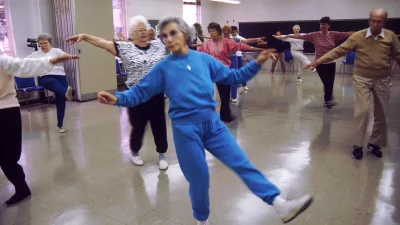
The idea is not to turn every break into a workout. A stroll, walking somewhere or moving around a little during the day already provides moments of muscle contraction. Ameli’s practical guide to heavy legs also advises avoiding, as far as possible, prolonged periods without changing position.
The benefits people experience vary according to the individual and the cause. Walking is neither a universal treatment for varicose veins nor a guarantee against thrombosis. Diagnosed venous disease may require other measures or medical monitoring.
Two movements to do during a day spent sitting
The first movement involves moving your ankles without leaving your chair. With your feet on the floor, you can gently raise your heels, lower them, then raise your toes. This flexing and extending movement engages the ankle and calf muscles. It can be repeated during breaks, according to your comfort and ability to move.
The second is simply to stand up and walk for a few moments, when circumstances allow. For people who cannot get around, gentle ankle movements can offer another way to change position. However, the choice of exercises should be adapted to any physical limitations or medical advice.
These actions are no substitute for a consultation. They are offered here as examples of ordinary movement, not as instructions to follow at all costs or as a protocol with guaranteed results.
What if you stand all day?
Standing for a long time can also worsen the feeling of heaviness. Changing posture, taking a few steps and avoiding clothes that constrict the legs may help. Assurance maladie also recommends limiting significant exposure to heat when symptoms are venous in origin.
For people with known venous disease, a healthcare professional may recommend suitable medical compression garments. These should not be chosen solely on the basis of a symptom read about online: their size, indications and any contraindications must be assessed. Do not stop or change a treatment that has already been prescribed solely on the basis of general advice.
Raising the legs may sometimes bring relief, but here too the cause of the symptoms matters. Persistent swelling, increasing pain or an unusual change in the skin warrants assessment rather than endlessly repeating exercises.
When “heavy legs” should not be dismissed
A leg that suddenly becomes more swollen than the other, painful, hot or red may raise concern about deep vein thrombosis, although these signs are not enough to establish a diagnosis. In this situation, urgent medical advice is needed. The UK’s NHS explains the symptoms of deep vein thrombosis and what urgent steps to take.
If the pain or swelling is accompanied by sudden shortness of breath, chest pain or feeling seriously unwell, call the emergency services immediately. In Luxembourg, the emergency number is 112. These signs may indicate a pulmonary complication, among other things, and should not be treated simply by walking or massaging the area.
Likewise, recurring or unexplained problems should be discussed with a doctor. There are many possible causes of swelling, and general advice cannot replace an examination.
What movement can realistically do
The calf muscle pump explains why walking and moving the ankles are among the recommendations for preventing common venous discomfort. The mechanism is well known, but the degree of relief varies and possible medical causes remain crucial.
Rather than promising to “get the circulation going again” in thirty seconds, the best rule of thumb is to break up periods of immobility regularly, without ignoring unusual symptoms. Simple movement can improve comfort. Identifying an illness, assessing swelling or choosing a treatment, however, is the role of a healthcare professional.