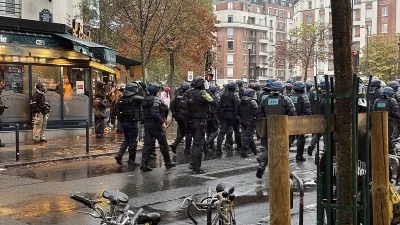
The three Canon français banquets ended on Sunday 25 October in Périgueux without the disorder feared by their opponents. Nearly 3,000 diners took their places at the Filature de l’Isle, according to the tally presented by mayor Michel Cadet. The elected official now says he is ready to welcome the organisation again. The calm observed over the weekend brings a security issue to a close; it does not settle the political controversy that has accompanied the event since June.
A weekend with no reported clashes
The banquets took place from 23 to 25 October in a municipal hall. In an interview published by ICI Périgord on 26 October, Michel Cadet described the organisation as professional, said the meals featured products from Dordogne and noted that participants had booked rooms at local hotels. He also said he had been “dragged through the mud” in the months leading up to the event.
The mayor therefore presents the weekend as confirmation that he made the right choice: the event went ahead, no gathering of opponents was reported outside the venue and the predicted incidents did not occur. He believes the local economy benefited. These assessments are the elected official’s own; no independent figures on spending, municipal revenue or the cost of the security arrangements have been published in the sources consulted.
Why the opposition was not just about public order
Reducing the protests to fears of disorder would leave part of the story out. As early as 30 June, more than 400 people had demonstrated outside the town hall, according to a report by Libération. Opposition councillors, trade unions and associations called for the banquets to be cancelled.
Their criticism targeted the political links they attribute to the company and the presence of Pierre-Édouard Stérin among its shareholders. It also drew on incidents reported at an earlier banquet in Caen. For their part, Canon français organisers reject the far-right label and present their events as celebrations of local produce, food and popular traditions.
The fact that the Périgueux event passed off without incident is therefore important, but limited information: it answers the question of whether public order was maintained that weekend. On its own, it neither validates nor invalidates criticism concerning the company’s funding, political networks or cultural message.
The debate returns to the town hall
The City of Périgueux confirms that the municipal council will meet this Thursday 29 October at 17:30. The meeting is open to the public. Michel Cadet has anticipated further criticism from his opponents during the meeting.
The municipal page consulted announces the meeting and links to its agenda, but that is not enough to establish that the Canon français will be the subject of a formal motion. A possible political exchange must therefore be distinguished from a scheduled vote.
To make the discussion verifiable, four questions can now be documented: what were the exact terms for renting the Filature de l’Isle; what public costs were incurred for security; what local benefits can be measured; and what criteria would the town hall use to decide whether to rent the venue again?
A local assessment, not a general verdict
After several months of tensions, the first finding can be summed up in one sentence: the banquets took place peacefully. The second is just as clear: opposition to Canon français was not based solely on the prediction that incidents would occur.
The debate would therefore benefit from moving beyond accusations of bad faith and returning to documents, contracts and figures. It is possible to establish that an event passed off smoothly. The political significance a town chooses to give it, or withhold from it, is a matter of public policy that must be open to explanation.