Looking for something?
A place, an idea, a question. Find the articles that interest you.
Articles to discover
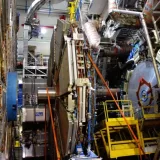 ATLAS: two photons put matter to the testA rare interaction involving W bosons has been observed in LHC data. The result, presented in September, strengthens a test of electroweak theory.
 Research and business: after submission, selectionThe ‘Thematically Open’ joint call had a deadline of 29 September. It brings together businesses and public research; results are due to be announced by January 2027 at the latest.
 Democracy: resources to counter interferenceThe European Parliament wants to strengthen the response to interference and protect elections. In its resolution of 15 September, it calls for a mandate and dedicated resources for the future resilience centre.
 Longevity: adapting society to the extra yearsThe UN is preparing a meeting on longer lives for 8 October. At the heart of the debate: social protection, access to services and the participation of older people.
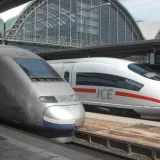 One ticket for several trains: European project moves forwardBooking a journey with several operators in a single transaction: that is the aim of a European project presented in May. The file appears in the documents for a Council meeting on 1 October.
 After the vote, who oversees European laws?Does a law achieve its aim once it has been passed? A September 2026 research briefing explains how the European Parliament can hold the executive to account.
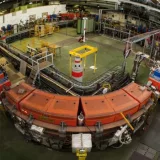 Three AI challenges for acceleratorsFaster simulation, anomaly detection and help with tuning: a scientific hackathon announced for 11 to 16 October will put several AI approaches to the test.
 Dark matter: a signal to be confirmedThe LUX-ZEPLIN experiment has detected an unusual interaction in its data. The team wants to understand its origin, without announcing a discovery of dark matter.
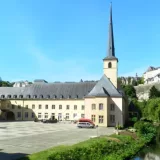 Science Slam: the audience gets to chooseSix researchers, ten minutes each and a vote in the room: Science Slam returns to neimënster on 30 October. The event is billed as being in English.
 Technoport: test your idea before setting upPre-incubation helps put a concept to the test; incubation supports more advanced projects, subject to selection and a monthly contribution.
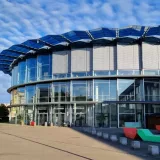 Observatoire 360°: four questions for schools and familiesOn 27 October at the Forum Geesseknäppchen, a half-day event will bring together research and practice on behaviour, cyberbullying, screens and AI. Parents and professionals are concerned.
 Quantum vacuum: a repulsion to put to the testPhysicists at the University of Luxembourg predict a repulsive interaction between atoms. Its dependence on distance recalls gravity, but its origin is electromagnetic and its detection remains to be explored.