Looking for something?
A place, an idea, a question. Find the articles that interest you.
Articles to discover
 The memory of paint fragmentsAt the National Gallery, projects link samples, images and earlier analyses. A way to make better use of paintings’ material archives.
 6G-CARE: remote care put to the testThe LIST is coordinating three years of European trials. In Luxembourg, rehabilitation and support for ambulance crews are intended to measure the value of advanced connections.
 Science at the tableUntil 12 October, France’s Fête de la science explores cooking, taste and food. Family experiments and a children’s podcast announced for 5 October.
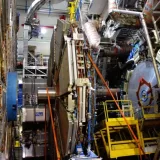 ATLAS: two photons put matter to the testA rare interaction involving W bosons has been observed in LHC data. The result, presented in September, strengthens a test of electroweak theory.
 Research and business: after submission, selectionThe ‘Thematically Open’ joint call had a deadline of 29 September. It brings together businesses and public research; results are due to be announced by January 2027 at the latest.
 Democracy: resources to counter interferenceThe European Parliament wants to strengthen the response to interference and protect elections. In its resolution of 15 September, it calls for a mandate and dedicated resources for the future resilience centre.
 Longevity: adapting society to the extra yearsThe UN is preparing a meeting on longer lives for 8 October. At the heart of the debate: social protection, access to services and the participation of older people.
 One ticket for several trains: European project moves forwardBooking a journey with several operators in a single transaction: that is the aim of a European project presented in May. The file appears in the documents for a Council meeting on 1 October.
 After the vote, who oversees European laws?Does a law achieve its aim once it has been passed? A September 2026 research briefing explains how the European Parliament can hold the executive to account.
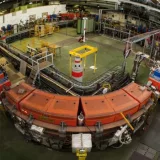 Three AI challenges for acceleratorsFaster simulation, anomaly detection and help with tuning: a scientific hackathon announced for 11 to 16 October will put several AI approaches to the test.
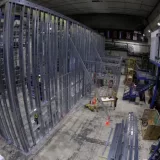 Dark matter: a signal to be confirmedThe LUX-ZEPLIN experiment has detected an unusual interaction in its data. The team wants to understand its origin, without announcing a discovery of dark matter.
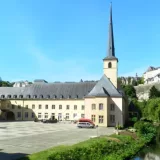 Science Slam: the audience gets to chooseSix researchers, ten minutes each and a vote in the room: Science Slam returns to neimënster on 30 October. The event is billed as being in English.