Looking for something?
A place, an idea, a question. Find the articles that interest you.
Articles to discover
 At Versailles, adapting heritage to the climate begins with observationHeat, humidity, drought: the palace and its gardens do not call for the same responses. Monitoring collections and biodiversity helps guide interventions.
 Construction in France: artisan activity declines, cash flow remains under pressureArtisan activity fell by 1% year on year in the third quarter of 2026, according to CAPEB. Insee’s October survey also sheds light on the sector’s difficulties, using a different scope.
 European sturgeon: what its disappearance from the Rhône tells us about migratory fishAcipenser sturio has been absent from the Rhône basin since the 1970s. Its life cycle between the sea, estuary and river explains why its conservation goes beyond protecting a single location.
 Saint-Denis: how a data centre’s heat supplies a neighbourhoodIn Saint-Denis, waste heat from a data centre feeds into an urban heating network. How does the system work, what does it cost, and could it be replicated elsewhere?
 CO₂ record in 2025: why the atmosphere continues to accumulate greenhouse gasesThe WMO reports a new record for CO₂, methane and nitrous oxide in 2025. What concentrations actually measure and what NOAA’s independent readings show.
 France in 2050: ageing, climate and the choices to make todayBy 2050, 16.5% of people in France could be aged 75 or over, while climate adaptation is being prepared on a trajectory of +2.7 °C. The report « France 2035, France 2050 » sets out the trade-offs ahead.
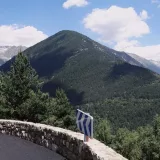 After Storm Aline: why reopening a road is not the same as rebuilding a valleyReopening a road makes it possible to reach a home; rebuilding infrastructure commits a valley to years of work.
 Heatwave: why the body becomes exhausted when nights stay hotSweating, humidity, the heart and kidneys: understanding the body’s limits in prolonged heat and MeteoLux’s new alert system.
 How shells preserve traces of the marine climateGrowth lines, isotopes and chemical analyses: researchers use shells as ocean archives, while taking care not to confuse local signals with the global climate.
 The solid Earth is becoming slightly less flattened: what satellites measureA study published on 9 September 2026 reveals that uplift in the polar regions accelerated between 1997 and 2015. This tiny change in the shape of the solid globe sheds light on the effects of ice and water redistribution.
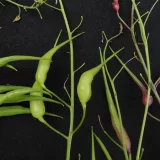 Rat’s tail radish: why its fruits are harvested above groundRat’s tail radish is grown for its young siliques, the fruits that contain the seeds. This distinctive feature changes which part of the plant is harvested and when it is picked.
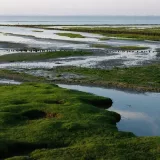 In extreme waves, marsh soil holds up better than its plantsA full-scale trial in the Netherlands distinguishes soil resistance from the buffering effect of vegetation. The findings could help complement dikes.