Looking for something?
A place, an idea, a question. Find the articles that interest you.
Articles to discover
 Lenticular clouds: why do they seem to stand still in the wind?Their lens-shaped form sometimes stays in place while air flows through them. Condensation, terrain and mountain waves explain this apparent paradox.
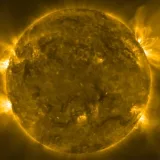 Solar Orbiter: tracing the origin of the solar windSolar Orbiter has linked a magnetic deformation observed in the solar wind to its source on the Sun. The discovery sheds light on magnetic reconnection and space storms.
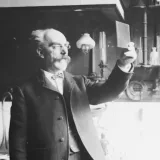 Gabriel Lippmann: light captured in memoryBorn in Hollerich, the physicist fixed colours in photographic plates. Their study still brings together optical research and museum work.
 Science at the tableUntil 12 October, France’s Fête de la science explores cooking, taste and food. Family experiments and a children’s podcast announced for 5 October.
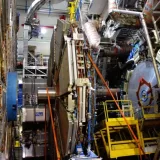 ATLAS: two photons put matter to the testA rare interaction involving W bosons has been observed in LHC data. The result, presented in September, strengthens a test of electroweak theory.
 Dark matter: a signal to be confirmedThe LUX-ZEPLIN experiment has detected an unusual interaction in its data. The team wants to understand its origin, without announcing a discovery of dark matter.
 Quantum vacuum: a repulsion to put to the testPhysicists at the University of Luxembourg predict a repulsive interaction between atoms. Its dependence on distance recalls gravity, but its origin is electromagnetic and its detection remains to be explored.
 Euclid: 31 quasars to understand the Universe’s infancyThe Euclid telescope has discovered 31 very ancient quasars, including two observed when the Universe was just 670 million years old. How do these beacons reveal the first black holes?
 At CERN, quantum entanglement can be read in the tracesATLAS and CMS have found strong evidence of entanglement between Z bosons originating from the Higgs. The experiment is easier to understand by following the particles detected.