Looking for something?
A place, an idea, a question. Find the articles that interest you.
Articles to discover


 From ‘Rossignol’ to ‘Au-delà du ciel’: utopia still has stories to tellImagining a better world does not eliminate conflict. Three books offer ways to look differently at coexistence, progress and artificial intelligence.
 Gemini Notebook records audio: what it keeps, and what you need to checkThe new mobile recorder turns speech into a working source. But a transcript is not an audio archive: what you need to know before a lecture or meeting.
 Fujifilm is betting on magnetic tape to store AI dataThe group has announced an investment of 10 billion yen in Odawara. Behind the goal of increasing capacity fivefold lies a practical issue: storing data without confusing archiving, backup and immediate access.
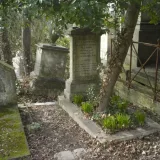 At Père-Lachaise, what makes the cemetery a refuge for wildlifeGrasses, trees and nighttime tranquillity: Père-Lachaise is home to documented wildlife. But observing species is not enough to measure whether their numbers are growing.
 Le Charles: filming a drama series on an operational aircraft carrierMilitary exercises, restricted access, reconstructed sets: production accounts of Le Charles show how the ship dictated some of the crew’s work.
 Why Star Wars spacecraft don’t look like real rocketsStaged rockets, the heat of atmospheric re-entry, life on board and the speed of light: what physics really allows spacecraft to do.
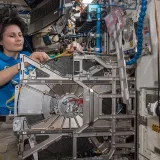 Artificial gravity: Italy consults researchers on an orbital platformASI is collecting proposals until 6 November 2026 for small automated experiments under adjustable gravity, including lunar and Martian gravity.
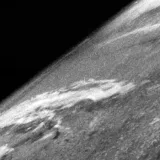 The first photograph of Earth from space: what the 1946 flight showedA camera aboard a V-2 photographed Earth on 24 October 1946, from an altitude of about 105 kilometres. A suborbital flight, long before images of the entire globe.
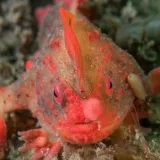 Photo Ark: why the 18,000-species milestone is more than a collection of imagesJoel Sartore’s project reached this milestone in August 2026 with a red handfish. His approach gives a place to smaller species that are often less visible.
 Klavdij Sluban: when young detainees take up the cameraSince launching a workshop at Fleury-Mérogis in 1995, the photographer has explored confined spaces while also giving teenagers the means to produce their own images.