Looking for something?
A place, an idea, a question. Find the articles that interest you.
Articles to discover
 The solid Earth is becoming slightly less flattened: what satellites measureA study published on 9 September 2026 reveals that uplift in the polar regions accelerated between 1997 and 2015. This tiny change in the shape of the solid globe sheds light on the effects of ice and water redistribution.
 Bleached corals and jellyfish: how to read the signs of an ocean in changeNOAA confirms the scale of heat stress on reefs, but jellyfish blooms do not follow a simple global pattern. Scientists explain why.
 In extreme waves, marsh soil holds up better than its plantsA full-scale trial in the Netherlands distinguishes soil resistance from the buffering effect of vegetation. The findings could help complement dikes.
 Guillaume Pitron: why the oceans are becoming a new arena for rivalryIn *Océans. Le nouveau partage du monde*, published on 14 October 2026, the journalist examines the scramble for undersea resources. The law of the sea and ecological risks shed light on what is at stake.
 Winter time: beneath the sea, animals follow different clocksOur clocks change, but the ocean does not. Yet fish, plankton and corals set their activity by the light, the tides, the Moon and the seasons.
 ‘Oceans’ by Guillaume Pitron: understanding the division of marine resourcesThe journalist’s new book explores the industrialisation of the seas. A useful starting point: rights over the seabed are not the same as rights over the waters.Bleached corals: why contact with a healthy clone speeds up their recoveryAn experiment at Stanford enabled five bleached fragments to recover through contact with genetically identical corals. The results are promising, but still limited to the laboratory.Oceans: what August’s heat record measuresCopernicus recorded an average of 21,07 °C at the ocean surface outside the polar regions in August 2026. This record, shared with March 2024, is based on ERA5; other datasets do not give it the same ranking.
 El Niño 2026–2027: reading the forecast at the right scaleThe WMO expects El Niño to strengthen and persist until February. This global climate signal does not, on its own, describe the winter in store for Luxembourg.
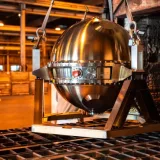 DAVINCI: why NASA is preparing a probe for Venus’s 465°C heatA DAVINCI capsule has withstood 465°C six times in ground tests. NASA wants to understand how Venus evolved and whether it once had liquid water.