Looking for something?
A place, an idea, a question. Find the articles that interest you.
Articles to discover
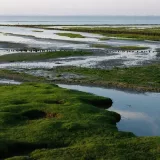 In extreme waves, marsh soil holds up better than its plantsA full-scale trial in the Netherlands distinguishes soil resistance from the buffering effect of vegetation. The findings could help complement dikes.
 Connected fridge and washing machine: five checks before paying moreScreens, apps and artificial intelligence are making their way into household appliances. Their usefulness also depends on updates, security and the functions available without an internet connection.
 Guillaume Pitron: why the oceans are becoming a new arena for rivalryIn *Océans. Le nouveau partage du monde*, published on 14 October 2026, the journalist examines the scramble for undersea resources. The law of the sea and ecological risks shed light on what is at stake.
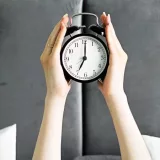 After the clock change in Luxembourg: getting back to a regular sleep routineSince 25 October, Luxembourg has switched back to winter time. Morning light, regular routines and precautions for the first few nights: practical pointers without false promises.
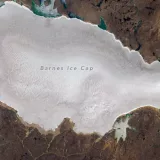 Barnes Ice Cap: why researchers speak of an interrupted glaciationPlants preserved beneath the ice trace an ancient advance, followed by a retreat. The finding sheds light on a slow process, without heralding an imminent deep freeze.
 Webb: reading planetary collisions in stardustA study of 21 debris discs distinguishes several mineral signatures. Astronomers infer collisions between large rocky bodies, without observing them directly.
 White roofs: what reflective paint can change in a buildingA light-coloured coating can limit the heat build-up on a roof. Its effect indoors also depends on the climate, insulation and the building.
 The Burghers of Calais: how Rodin gave sacrifice a faceBy isolating the gestures and doubts of six men, Rodin transforms the story of 1347 into a meditation on collective courage.
 ‘Oceans’ by Guillaume Pitron: understanding the division of marine resourcesThe journalist’s new book explores the industrialisation of the seas. A useful starting point: rights over the seabed are not the same as rights over the waters.
 Wind turbines and bats: what nocturnal curtailment really provesFrench wind farms show a sharp fall in mortality after targeted shutdowns. Another study involving Luxembourg simulates their energy cost: the two sets of results do not measure the same thing.
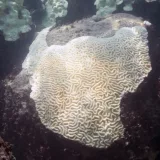 Bleached corals: why contact with a healthy clone speeds up their recoveryAn experiment at Stanford enabled five bleached fragments to recover through contact with genetically identical corals. The results are promising, but still limited to the laboratory.
 Resilienzpak: where do the measures stand?The 20 October review distinguishes between aid already in force, legislation submitted and an economy still under pressure.