Articles to discover
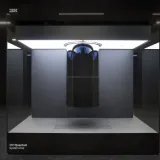 Basic science · Nov 22, 2026Willow exceeds the classical ceiling in a specific quantum gameWillow scores 98.3% in the magic square game, compared with a classical ceiling of 88.9%. Here’s why these figures relate to a specific test, and how it differs from experiments involving 71 and 105 qubits.↗
 Basic science · Nov 22, 2026A supersolid at room temperature: what the experiment really showsResearchers report a supersolid in an exciton-polariton condensate at room temperature. The result concerns a fleeting optical system, not a ready-to-use material.↗
 Basic science · Nov 21, 2026The Casimir effect: how do you measure a force in a vacuum?Steven K. Lamoreaux’s experiment measures a force between a conducting sphere and a plate, separated by 0.6 to 6 micrometres. It tests Casimir’s prediction without measuring available energy.↗
 AI · Nov 1, 2026OpenAI and Yang–Mills: understanding the announcement without confusing the evidenceOpenAI claims to have proved existence in quantum physics. The Yang–Mills problem also requires a mass gap: here are the key distinctions for understanding the announcement.↗
 AI · Nov 1, 2026AI and scientific evidence: what Lean checks, and what still needs examiningOpenAI’s announcements have revived the question of evidence produced by AI. The logical core, assumptions and results of AlphaProof: key points for assessing them.↗
 Basic science · Oct 28, 2026Claude Cohen-Tannoudji: cooling atoms to understand them betterThe physicist, who died on 22 October 2026 aged 93, helped turn light into a tool for controlling atoms. His legacy brings together experiments, theory and teaching.↗
 Basic science · Oct 2, 2026Quantum vacuum: a repulsion to put to the testPhysicists at the University of Luxembourg predict a repulsive interaction between atoms. Its dependence on distance recalls gravity, but its origin is electromagnetic and its detection remains to be explored.↗
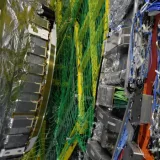 Basic science · Oct 1, 2026At CERN, quantum entanglement can be read in the tracesATLAS and CMS have found strong evidence of entanglement between Z bosons originating from the Higgs. The experiment is easier to understand by following the particles detected.↗


