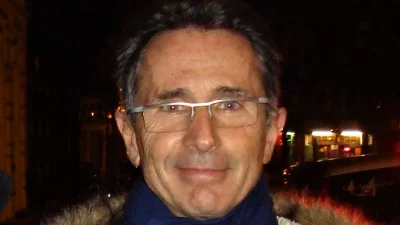
For Irina Simoncini, a walk in the forest is about more than the mushrooms that end up in a basket. A Luxembourg resident, she runs masterclasses and discovery walks where observation matters as much as foraging. Her story links a curiosity that began in a family setting to a way of sharing knowledge that is attentive to habitats and to the limits of what we think we know.
A curiosity nurtured by family
In a profile published by RTL on 12 November 2026, Simoncini says she grew up with parents and grandparents who spent time in the forest. Foraging is part of her family memories. She links this practice to her later interest in biochemistry, particularly the molecules that give mushrooms their aromas, flavours or toxicity.
The link between these two stages sheds light on what she does today. Her childhood curiosity is not presented as expertise already acquired: it developed further through learning and scientific interest. Today, Simoncini offers walks and classes about mushrooms in Luxembourg. RTL reports that she encourages participants to look at their surroundings and take the time to observe them, rather than judging a walk by the contents of the basket.
Reading a landscape, not just looking for a species
Luxembourg’s forests bring together different habitats, sometimes over short distances. Simoncini tells RTL about beech forests, mixed woodland, drier slopes and damp valleys. This diversity offers a first point of reference for a walk: the location and its conditions matter, and mushrooms do not appear in the same way everywhere.
The value of this observation goes beyond the search for edible species. The Groupe de recherche mycologique de la Société des naturalistes luxembourgeois notes that fungi decompose wood, provide plants with nutrients and serve as food for many animals. It recommends leaving behind any that do not interest the walker, rather than destroying them on the grounds that they might be toxic to humans. This ecological role changes how a find is viewed: a mushroom can have a place in the forest even if it does not make it into the kitchen.
Weather also features in the observations reported by Simoncini. She says she sometimes notices later fruiting after the return of rain following dry autumns. She presents this as field experience, not as evidence about the climate. This point of reference encourages people to look at a season’s conditions without turning a personal observation into a general rule.
From observation to documented knowledge
The work of the National Museum of Natural History Luxembourg shows another stage in the study of fungi. Its mycological collection brings together dried specimens in the LUX Herbarium, classified by collector and species. External specialists contribute to their verification and preparation. The collections thus preserve identified specimens and the information that makes it possible to find and study them.
For some fungi in the Orbiliomycetes group, the museum also describes the use of genetic “barcoding”. This method makes it possible to distinguish cryptic species that are difficult to tell apart by observing their shape alone. It is used in specialised work on collections; it is neither a necessary step on every walk nor an automatic verification of what a participant finds.
The museum holds, among other things, the mycological herbarium assembled by Jean Feltgen at the end of the nineteenth century, as well as more recent collections. It is gradually incorporating Guy Marson’s collection. Through the specimens and the information accompanying them, knowledge of mushrooms in Luxembourg is also built over time: a collection can become material for study that other specialists may take up.
A walk that does not depend on the basket
RTL reports that Simoncini warns against the idea that a phone app can guarantee that a mushroom is edible. Identifying mushrooms for consumption requires expertise and cannot be reduced to an image or a single sign. Her walks can therefore be seen as an opportunity to learn how to look, not as permission to eat a find. Doubt about an identification cannot be resolved by relying on a simple digital recognition tool.
This caution reflects a broader idea: the value of a walk can lie in what it teaches people to see. A species left where it is also plays a part in the life of its habitat; an observation does not automatically become verified knowledge or foraging advice. For Simoncini, the thread linking childhood, scientific training and activities in Luxembourg lies in this attentiveness passed on to others, without confusing curiosity, foraging and expertise.
References
- Profile of Irina Simoncini, RTL
- Foraging advice, Groupe de recherche mycologique de la Société des naturalistes luxembourgeois
- Mycology and lichenology collections, MNHNL
Mushrooms growing on dead wood. Illustrative photo.