A prison can run short of places without people spending longer in detention. This is the mechanism described by Justice Minister Elisabeth Margue in three parliamentary replies of 27 October 2026 concerning Uerschterhaff prison in Sanem. Admissions are rising, while the average length-of-stay indicator remains close to three and a half months.
These replies do not describe all Luxembourg prisons. They concern a facility reserved for pre-trial detention. Reading them helps explain a very tangible pressure: more people to accommodate in a prison designed for 400 detainees, with additional sleeping places and mattresses on the floor in some cells.
A peak, an average and a capacity: three different measures
In her reply to MP Dan Biancalana, the minister says the average daily population rose from 247 people in January 2025 to 423 in September 2026. The peak, reached on 15 September 2026, was 432 people, or 108% of the 400 places planned when the prison was built.
For October, the table compiled up to the 19th of the month shows an average of 406 people. This figure is not the exact headcount for 19 October alone: another table gives 401 detainees on that date. Presenting 406 as a count taken on that day would conflate an average over a period with a snapshot at a particular point in time.
The capacity also needs clarification. The building was designed for 400 people; its theoretical capacity was subsequently increased to 416, then to 417 places. The occupancy rates in the ministerial table are still calculated against the initial capacity. Changing the reference figure mechanically alters the percentage, without making the people present or the constraints in the cells disappear.
More admissions, without a comparable increase in length of stay
The figures provided to Dan Biancalana and Dan Hardy record 820 admissions in 2023, 844 in 2024 and 985 in 2025. Between the beginning of 2026 and 19 October, the prison had recorded 925.
These figures should be read as annual or partial flows, not as the number of people present at the same time. An admission and a release are movements; occupancy is a state. The two are related, but they are not interchangeable.
The ministry projects 1,233 admissions over the whole of 2026 if the trend continues, around 25% more than in 2025. This is a conditional estimate published in October, not an annual total already recorded.
At the same time, the detention-length indicator, referred to by the acronym IALI in the replies, stands at 3.5 months in 2023, 3.7 in 2024 and 3.6 in 2025, as well as in the calculation compiled up to 19 October 2026. The ministry therefore attributes the increase in the population mainly to admissions. However, this aggregate indicator cannot predict how long any one person will stay, or describe the length of all pre-trial detentions in Luxembourg.
Twenty additional places announced
The reply to MP Marc Goergen confirms that detainees have been sleeping on mattresses on the floor since the end of August. The minister specifies that these mattresses are in the cells, not in the corridors.
The immediate measure announced is to convert twenty double cells into cells for three people by adding beds. One triple cell already exists, so the total is to reach twenty-one. The theoretical capacity would thus rise from 417 to 437 places.
The timetable given in the replies is the end of October 2026. These documents announce the installation; by themselves, they cannot certify that it had been completed by the date this article was published.
This measure increases the number of sleeping places in the existing facility. It does not amount to opening a new prison. To assess its effect, the number of beds will therefore need to be considered alongside the actual accommodation conditions and the trend in admissions.
Pressure also evident in staff workload
The parliamentary replies report a total of 357.15 full-time equivalents as at 19 October 2026, including 251.05 in security. These are employment figures, not the number of officers present at each post or on each shift.
The reply to Dan Hardy also explains that a precise breakdown by team is not provided, owing to the organisation of work into three daily shifts, flexible working hours and the involvement of external personnel.
The ministry also says that the monthly average of overtime worked by prison officers rose from 120 hours between January and March to 304 between April and September 2026. Nothing in this passage allows these figures to be presented as overtime per officer. Reading them that way would considerably inflate the figure.
Elisabeth Margue says that statutory working and rest periods are being observed and that security has been maintained. These are assurances given by the ministry; they are no substitute for independent observation of detention conditions.
The number of beds does not sum up scrutiny of detention conditions
In her presentation of the 2025 annual report, published on 18 June 2026, the Ombudsman recalls that her first report on Uerschterhaff had identified practices relating to admission, health and detention conditions that needed improvement. This earlier work is not a finding about the September 2026 peak. It does, however, serve as a reminder that scrutiny covers more than the occupancy rate alone.
In the medium term, the replies of 27 October mention scenarios linked to the rehabilitation of Luxembourg Prison in Schrassig, which is still being analysed. They also mention procedural reforms that had been tabled but not adopted, including accelerated court proceedings.
There are therefore two things to follow: whether the announced places have actually been brought into service, and whether they are sufficient in the face of new admissions. The October figures document pressure. They do not yet show that a lasting solution has been secured.
Sources - Reply to Dan Biancalana, question no. 4847, 27 October 2026 — PDF. - Reply to Dan Hardy, question no. 4806 — PDF ; reply to Marc Goergen, question no. 4807 — PDF. - Ombudsman: presentation of the CELPL 2025 annual report, 18 June 2026.
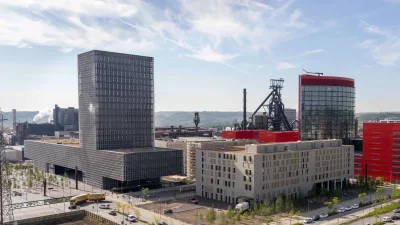
Archive photograph: Uerschterhaff prison in August 2024.